


North Peninsula State Park, Florida
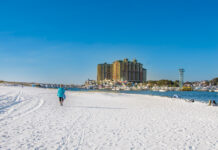
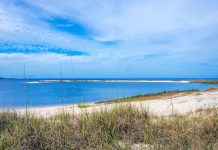
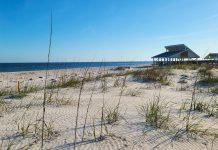
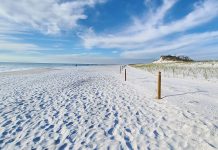
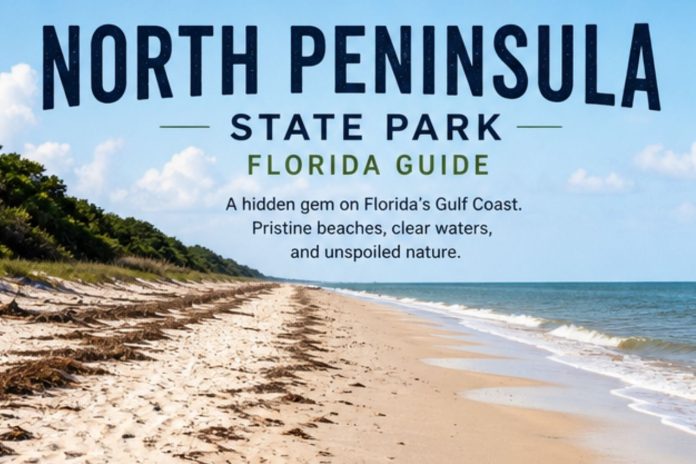
North Peninsula State Park is the moment Ormond Beach’s coastline stops being a town and starts being a place again. Close to three unbroken miles of dune and scrub sit here with no boardwalk, no lifeguard tower, and free admission, and the sand itself carries the same orange coquina character I’ve come to associate with this stretch of coast, just with nobody around to notice it but you.
This park straddles State Road A1A about four miles south of Flagler Beach and just north of Ormond-by-the-Sea, more than 550 acres split between the Atlantic Ocean on one side and the meandering salt marsh of Smith Creek and the Intracoastal Waterway on the other. There’s exactly one beach access point serving nearly three unbroken miles of shoreline, which tells you most of what you need to know about how quiet this place stays.
In this guide I’ll walk you through the park’s distinct areas, go deep on what makes this sand and water different from the developed beach just south of here, cover where dogs are and aren’t allowed, score it honestly, and tell you exactly who this park actually suits. For more on the wildlife and birding here, I’ve also written a birding guide and a beach finds guide for this stretch. This guide covers North Peninsula on its own, since it deserves a fuller telling than the few paragraphs it got tucked inside my Ormond Beach guide. I close with why I think this is one of the most underrated stops on this entire barrier island.
The Vibe & Culture at North Peninsula State Park
The Point Where Ormond Stops Being a Town
This park doesn’t perform for visitors. It just keeps doing what undeveloped Florida coastline has always done.
Drive north from Ormond-by-the-Sea and the last dog beach signs and beachfront homes give way abruptly to saw palmetto and sea grape holding down ancient dunes on both sides of A1A. There’s no entrance station, no gift shop, and no fee. You park at Smith Creek Landing, cross the highway, and the Atlantic simply opens up in front of you, undeveloped for as far as you can see in either direction.
The culture here, if you can call it that, is set entirely by the landscape rather than by any human infrastructure. Cyclists riding the Ormond Scenic Loop stop at the park’s bicycle maintenance station. Anglers work the Intracoastal side at Smith Creek Landing for crab and fish rather than the ocean itself. Birders come specifically for the Atlantic Flyway migration in January, and hikers take on the Coastal Strand Trail’s hilly, mosquito-prone terrain knowing full well what they’re signing up for.
Seasonally, this park runs on the same sea turtle calendar as the rest of this coast, with loggerheads, greens, and the occasional rare leatherback nesting from May through October. Winter brings the best birding as migratory species move through the Atlantic Flyway. Summer brings mosquitoes thick enough that more than one visitor has turned back on the Coastal Strand Trail before finally succeeding on a cooler, drier day.
North Peninsula State Park Areas: Four Distinct Stretches
This park is small enough to see in a single visit, but each part of it offers a genuinely different experience.
Smith Creek Landing & the Trailhead
40 Highbridge Rd. · Free Parking
Smith Creek Landing sits on the Intracoastal side of A1A, and it’s both the trailhead for the Coastal Strand Trail and a destination in its own right. Accessible picnic tables and an overlook let you take in the salt marsh and the meandering creek without much effort, and a bicycle maintenance station serves cyclists riding the broader Ormond Scenic Loop that passes right by.
The crowd here mixes hikers gearing up for the trail, anglers and crabbers working the creek’s banks, and cyclists taking a break mid-ride. It’s a low-key, functional stop rather than a destination unto itself, but it’s genuinely well-designed for what it does.
I always start here rather than crossing straight to the beach, since the marshy basin has a primordial feel that sets the tone for the rest of the park. It’s easy to imagine what this whole coast looked like long before any of it was developed, standing at this overlook.
The Coastal Strand Trail
2.3 to 2.5 Miles Round Trip · Moderate Difficulty
This trail is the park’s signature hike, beginning in the marshy Smith Creek basin and climbing to the Atlantic Coastal Ridge before looping back. The terrain is hillier than most Florida trails, crossing from mangrove wetland through coastal scrub, with the section north of the powerline running through genuine scrub habitat rather than the maritime hammock closer to the trailhead.
Wildlife sightings here are the real draw. Gopher tortoises and the elusive Eastern indigo snake both call this habitat home, and the ridge itself sits along the Atlantic Flyway, making January a genuinely excellent month for birders willing to brave the trail. Mosquitoes are a serious, often-mentioned consideration in the warmer months, enough that some hikers have turned back on their first attempt before returning better prepared.
I’d recommend this trail to anyone who wants a real hike rather than a beach stroll, but come prepared. Bug spray isn’t optional here in summer, and the hilly terrain is more of a workout than most people expect from a coastal Florida trail.
The Undeveloped Beach
Nearly Three Miles · One Access Point
The beach itself is the park’s main event, close to three unbroken miles of Atlantic shoreline with only a single beach access point breaking up the wild frontage. There’s no lifeguard on duty, though park staff patrol regularly, and the sand here carries the same coarse, orange coquina character found at Ormond’s Crotty Park and dog beach just south of here, an extension of the same Anastasia formation that colors this whole stretch of coast.
The crowd is thin and scattered, surf anglers working the shoreline, swimmers and surfers taking advantage of the unguarded but genuinely uncrowded water, and beachcombers looking for shells and sea beans along the wrack line. Sea turtles nest here from May through October, and the lack of development means less artificial light to disorient hatchlings, one of the reasons this stretch matters so much for their survival.
This is genuinely one of the best stretches in this entire guide series for a long, uninterrupted walk. I’ve gone the better part of an hour here without seeing another person, something that’s become increasingly rare the further south you travel on this coast.
Highbridge Road & The Loop Connection
Scenic Drive · Bicycle & Vehicle Access
Highbridge Road crosses over from Smith Creek Landing and connects directly into the Ormond Scenic Loop and Trail, a 30 mile scenic drive through river, marsh, and old Florida scrub that most Daytona area visitors never think to take. Following the road over the bridge puts cyclists onto narrow, curvy pavement shared with vehicles, but the marshy landscape along the way is unlike almost anything else on this developed barrier island.
The crowd here is almost entirely cyclists and scenic drivers rather than beachgoers, people who’ve specifically sought out this quieter, inland route as a complement to the park’s ocean side. It’s a slower, more deliberate way to experience this part of Florida, and it rewards anyone willing to take the detour.
I’d pair a Coastal Strand Trail hike with a drive or ride down this connecting road if you have the time. It extends the sense of undeveloped old Florida well past the park’s official boundary.
North Peninsula State Park Rankings: Expert Scores Across 11 Categories
These scores reflect a park built entirely around undeveloped habitat rather than visitor amenities, which shows clearly in a few of these categories.
Sand Quality
7/10
Coarse, coquina-tinted quartz, an extension of the same orange sand found at Ormond’s northern beaches, undisturbed by development or heavy foot traffic.
Hiking & Beach Walking
9/10
Nearly three miles of undeveloped beach plus a genuinely hilly, varied inland trail. Among the best walking in this entire guide series for anyone chasing solitude.
Shelling
6/10
Genuinely rewarding given how little foot traffic this beach sees. Shells and sea beans turn up regularly along the wrack line.
Water Conditions
6/10
Typical Atlantic surf, entirely unguarded though patrolled by park staff. Swim at your own risk, same as any undeveloped stretch of this coast.
Scenery & Natural Beauty
9/10
One of the most naturally beautiful stretches in this guide series, with genuine dune, scrub, and marsh habitat and none of the development found just south of here.
Birding & Wildlife
9/10
Gopher tortoises, Eastern indigo snakes, Florida scrub-jays, and a genuine stop on the Great Florida Birding and Wildlife Trail, with the Atlantic Flyway bringing strong migration activity every January.
Family Friendliness
5/10
Rewarding for older kids interested in nature, but there’s no lifeguard, no concessions, and mosquitoes can be a real deterrent for younger children in summer.
Dog Friendliness
4/10
Leashed dogs are welcome throughout the park’s trails but are not permitted on the beach itself or inside any park buildings, a real distinction to plan around.
Solitude & Peace
10/10
The best solitude score in this entire guide series. A single access point serving nearly three miles of beach means genuine quiet almost every time you visit.
Entertainment & Nightlife
1/10
None, and that’s the entire point of this park. No concessions, no lights, nothing beyond the trail and the sand.
Parking & Beach Access
6/10
Free parking at Smith Creek Landing, but only one beach access point for the entire nearly three mile stretch. Simple, but not especially convenient if you want to walk the far ends.
North Peninsula State Park Sand & Water
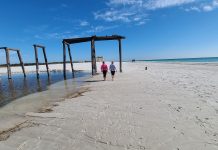
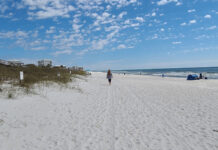
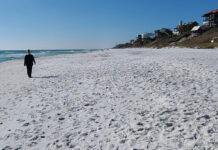
This beach runs wide, flat, and completely undeveloped for nearly three miles, easy walking at the water’s edge where the sand stays firm, and a little softer and coarser up near the dunes. There’s no boardwalk or amenities to speak of, just open sand the whole way, plenty of room for a long walk, a picnic blanket, or hunting for shells without another soul in sight. It’s less a beach built for sandcastles and games and more one built for getting away from everything else.
The water here runs green to blue-green on a calm day, the same as the developed beaches just south, but there’s no lifeguard anywhere along this stretch, only park staff patrolling by vehicle. Entry is gradual most places, and the surf draws a few surfers specifically because it stays uncrowded, but rip currents are a real risk here just like anywhere on this coast, and you’re swimming entirely at your own risk with nobody watching the water.
-
Walkability. Nearly three miles of firm, flat, undeveloped sand with only one access point. One of the best long walks in this whole guide series.
-
Softness & Playability. Firm at the waterline, softer and a bit coarser up near the dunes. No development to interrupt a long, open stretch of sand.
-
Barefoot Comfort. Comfortable most of the year, though the coarser coquina content feels a bit rougher underfoot than the finer sand at some beaches further south.
-
Swimmability. Swim at your own risk. There’s no lifeguard tower anywhere in this park, only staff patrols, so treat the water with real caution.
Want the full geology, grain composition, and the complete sand and water condition ratings? I broke it all down separately in Sand & Shore: North Peninsula State Park.
Dogs & Pet Accessibility at North Peninsula State Park
Are Dogs Allowed on the Sand? RESTRICTED.
Leashed dogs are welcome throughout this park’s trails, but they’re not allowed on the beach itself or inside any park buildings.
Where Dogs Are Allowed
- ✓The Coastal Strand Trail, leashed, for a genuine hike through marsh, scrub, and coastal habitat.
- ✓Smith Creek Landing’s picnic area and overlook, leashed, on the Intracoastal side of the park.
Where Dogs Are NOT Allowed
- ✗The Atlantic beach itself, for the park’s entire nearly three mile length.
- ✗Any park building, including restrooms and covered areas at Smith Creek Landing.
Paws on the Ground Reality
This is a genuinely good trail for a dog that handles heat and bugs well, but come prepared. There’s no water source anywhere in the park, so bring enough for both of you, and remember that summer mosquitoes here are bad enough to turn back plenty of human hikers, let alone a dog low to the ground in the brush. The Coastal Strand Trail’s hilly terrain and mixed sand and dirt footing are generally easy on paws, though the exposed scrub sections offer little shade at midday.
Since the beach itself is off limits, this isn’t the park to choose if a swim is the main goal for your dog, but it’s a genuinely rewarding walk if a real hike matters more that day. If your dog does want to cool off in the water, Ormond’s dog beach a short drive south is the better choice.
Crowd Levels and the Overall Feel of North Peninsula State Park
This park runs quiet essentially year round, and it’s rare to encounter more than a handful of other visitors even on a nice weekend day, simply because there’s only one beach access point for the entire stretch.
You’ll find a thin, purpose-driven crowd here rather than a beach-day crowd. Hikers and cyclists use Smith Creek Landing as a trailhead, surf anglers and swimmers scatter along the beach, and birders show up specifically for migration season.
The feel here shifts by wildlife calendar more than by tourist season:
- January: peak migratory bird activity along the Atlantic Flyway, the best month for serious birders
- Spring: comfortable hiking weather before the mosquitoes become a real factor on the Coastal Strand Trail
- Summer: peak sea turtle nesting season and the buggiest stretch of the year on the inland trail
- Fall and winter: the most comfortable walking conditions, with hatchlings emerging into October
Who Is North Peninsula State Park Really For?
✓ Who Will Love This Park
-
Anyone chasing genuine solitude on a developed barrier island, since a single access point keeps this beach consistently quiet
-
Birders hoping to catch the Atlantic Flyway migration, especially in January
-
Hikers who want a genuinely varied, hilly trail rather than a flat beach stroll
-
Anyone curious about Florida’s coquina sand geology, since this beach shows the orange coloring more consistently than almost anywhere else on this coast
-
Surfers and surf anglers who value uncrowded water over lifeguard coverage and amenities
-
Cyclists riding the Ormond Scenic Loop who want a genuine rest stop with real facilities
✗ Consider Another Beach If…
-
You need lifeguard coverage. This entire park is unguarded, patrolled only by park staff
-
You’re bringing young kids who need concessions, restrooms right on the sand, or a splash pad. Head to Ormond’s Andy Romano or Tom Renick Parks instead
-
You’re visiting in summer and mosquitoes are a dealbreaker. The Coastal Strand Trail gets genuinely buggy in warmer months
-
You want to bring your dog onto the sand. Leashed dogs are welcome on the trails but not on the beach itself
-
You want multiple easy access points along a long beach. This entire nearly three mile stretch has only one
-
You’re looking for nightlife or dining nearby. This park closes at sunset and stays that way, with nothing built up around it
Things to Do at North Peninsula State Park, Florida
This park rewards a slower, more deliberate visit than a typical beach day. Here’s what actually fills the time here.
-
Hiking the Coastal Strand Trail. A 2.3 to 2.5 mile round trip through marsh, scrub, and coastal habitat, with real elevation change and a genuine chance at spotting gopher tortoises or indigo snakes.
-
Birding. A stop on the Great Florida Birding and Wildlife Trail, with the Atlantic Flyway bringing strong migration activity every January.
-
Surfing. Uncrowded, unguarded waves draw surfers specifically seeking solitude over amenities.
-
Fishing & Crabbing. Surf fishing works well on the ocean side, while Smith Creek Landing on the Intracoastal side offers calmer water fishing and crabbing.
-
Cycling. A bicycle maintenance station at Smith Creek Landing serves riders on the broader Ormond Scenic Loop and Trail.
-
Beachcombing. Shells and sea beans turn up regularly along this lightly trafficked stretch of sand.
-
Wildlife Watching. Gopher tortoises, Eastern indigo snakes, Florida scrub-jays, and sea turtles nesting May through October all inhabit this park.
Local Knowledge and Practical Advice
A few things I’ve picked up walking this park more times than I can count:
-
Bring bug spray for the Coastal Strand Trail in summer. Mosquitoes here are genuinely enough to turn some hikers back before they finish.
-
Bring your own water. There’s no concession stand anywhere in this park, only restrooms and an accessible overlook at Smith Creek Landing.
-
Leave the dog off the sand. Leashed dogs are welcome on the trails but are not permitted on the beach itself or in park buildings.
-
There’s no entrance fee. This park is free, a rarity worth appreciating given how much natural beach frontage it protects.
-
Visit in January for the best birding. The Atlantic Flyway migration brings genuine variety to this park’s bird life during that month specifically.
-
There’s no lifeguard anywhere in this park. Swim cautiously and know that park staff patrol rather than actively guard the water.
-
Nesting season runs May through October. This park’s total lack of artificial lighting is part of why it matters so much for hatchling survival, so keep any personal lighting minimal after dark.
-
Combine a visit with the Ormond Scenic Loop. Highbridge Road connects directly into this 30 mile scenic drive, extending the undeveloped feeling well past the park’s official boundary.
Where to Stay Near North Peninsula State Park, Florida
There’s no lodging inside the park itself, so here’s how to base a visit nearby.
Ormond-by-the-Sea, South of the Park
The closest lodging sits a short drive south in Ormond-by-the-Sea, with beachfront homes and smaller condo buildings. See my full Ormond Beach guide for details on staying in that area.
Flagler Beach, North of the Park
A short drive north, Flagler Beach offers small-scale motels and vacation rentals along its own stretch of orange coquina sand, a natural pairing with a North Peninsula visit.
Camping Nearby
Beverly Beach Camptown RV Resort in Flagler Beach and several other RV parks along this stretch of coast offer camping within a short drive of the park entrance.
Inland Volusia & Flagler Counties
For lower rates, inland corridors along US-1 on either side of the park offer a wider range of budget options for visitors willing to drive in for the day.
What Makes North Peninsula State Park Different from Nearby Beaches
North Peninsula stands apart because it protects the last genuinely undeveloped stretch of this barrier island, with a single access point keeping the crowd essentially nonexistent.
A few other features make it distinct:
The most consistently orange sand on this coast
Without any development or heavy foot traffic to disturb it, this beach shows the coquina-tinted orange color more consistently than the developed stretches further south.
A real hike, not just a beach walk
The Coastal Strand Trail’s hilly terrain and habitat variety set it apart from the flat boardwalks and beach crossovers found at nearly every other stop in this guide series.
Zero commercial development
No concessions, no gift shop, no entrance fee. Very few state parks on this coast keep such a light footprint.
North Peninsula State Park vs. Nearby Beaches
These are the places visitors most often weigh against this park, and the honest read on when you’d choose one over the other.
North Peninsula State Park vs. Ormond Beach
Ormond Beach, just south, offers the amenities, dog access, and history this park deliberately lacks. Choose Ormond for convenience and choose North Peninsula for genuine wilderness.
North Peninsula State Park vs. Flagler Beach
Flagler Beach, just north, shares the same coquina-orange sand character but adds a small downtown and a narrower, more developed beach. The two pair naturally in a single day trip.
North Peninsula State Park vs. Canaveral National Seashore
Canaveral National Seashore offers a similar undeveloped experience much further south on the Space Coast, at a larger scale but with an entrance fee. North Peninsula gives you the same wilderness feeling for free, closer to Daytona.
Bottom line: North Peninsula State Park is the genuine wilderness chapter of this barrier island’s story, tucked quietly between two more developed beach towns. Ormond gives you the amenities. Flagler gives you the small-town charm. North Peninsula gives you the closest thing to untouched coastline this stretch of Florida has left.
North Peninsula State Park, Florida: Frequently Asked Questions
Is North Peninsula State Park worth visiting?
Yes, especially for anyone seeking genuine solitude on a developed barrier island. Nearly three miles of undeveloped beach and a real hiking trail set it apart from the beach towns just north and south of it.
Is there a fee to enter North Peninsula State Park?
No, admission is free, a genuine rarity among Florida’s coastal state parks.
Are dogs allowed at North Peninsula State Park?
Leashed dogs are welcome on the park’s trails but are not permitted on the beach itself or inside any park buildings.
Is there a lifeguard at North Peninsula State Park?
No. The beach is patrolled regularly by park staff, but there is no staffed lifeguard tower anywhere along the shoreline.
Why is the sand orange at North Peninsula State Park?
The color comes from coquina shell fragments that have absorbed iron oxide over time, part of the Anastasia formation running beneath this coast. Florida State Parks describes the beach’s orange sand directly in its own materials.
How long is the Coastal Strand Trail?
The trail runs 2.3 to 2.5 miles round trip, starting at Smith Creek Landing and climbing from marsh habitat to the Atlantic Coastal Ridge before looping back.
What wildlife can you see at North Peninsula State Park?
Gopher tortoises, Eastern indigo snakes, Florida scrub-jays, and a wide range of migratory birds along the Atlantic Flyway, plus sea turtles nesting May through October.
Is North Peninsula State Park good for families?
It suits older kids interested in nature well, but the lack of lifeguards, concessions, and summer mosquitoes make it less convenient for families with young children than a developed beach park.
Where is North Peninsula State Park located?
On State Road A1A about four miles south of Flagler Beach and just north of Ormond-by-the-Sea, with the main entrance and trailhead at Smith Creek Landing on Highbridge Road.
What is the best time of year to visit North Peninsula State Park?
January offers the best birding during the Atlantic Flyway migration. Fall and winter generally offer the most comfortable hiking conditions, while summer brings the most mosquitoes on the inland trail.
Patti’s Perspective: My Honest Take on North Peninsula State Park
This park deserved its own guide, and I’m glad I’m finally giving it one. Tucking it into a few paragraphs alongside Ormond Beach undersold what’s actually happening on this stretch of sand, both the genuine wildness of the place and the fact that its orange coquina color runs more consistently here than almost anywhere else I’ve walked on this coast.
What I love most about this park is how little it asks of the state or the visitor to keep functioning. No entrance fee, no gift shop, just a trailhead, a bicycle station, and nearly three miles of beach that mostly gets left alone. I’ve walked stretches of this sand without seeing another person for the better part of an hour, something that’s become genuinely rare the further south you travel on this same barrier island.
If you’ve read my Ormond Beach guide and started noticing the orange in the sand there, come here next. This is where that story reaches its fullest expression, uninterrupted, unhurried, and entirely worth the short drive north.
My verdict: 8/10. One of the most underrated stops on this entire barrier island. A free, genuinely wild stretch of orange-sand coastline with real hiking and rich wildlife, held back only by the total absence of amenities for families who need them.
Want to Live by the Water?There’s no real estate inside North Peninsula State Park itself, since preserving this undeveloped stretch is the entire reason it exists as a state park. The surrounding towns, though, offer genuine waterfront living within easy reach. Ormond-by-the-Sea sits just south, and Flagler Beach sits just north, both offering a quieter alternative to the busier beach markets further south on this coast.Buyers drawn to this stretch tend to value proximity to genuinely undeveloped coastline, a rarer commodity the further south you go on Florida’s Atlantic coast. Limited inventory near the park’s boundary tends to command a real premium given how little new development can happen so close to protected land.If living by the water is something you’re considering, whether full time, part time, or as an investment, it’s worth exploring what’s available in the towns surrounding this park.Explore Waterfront Living at LiveByTheWater.com
Real estate referral partner