



St. George Island Beaches, Florida
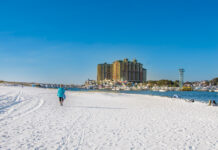
St. George Island is the beach people are talking about when they say Florida still has undiscovered coastline, except this island is no secret at all. Dr. Beach ranked it number one in America in 2023. The sand earned it. The quiet earned it. And after walking it in every season and every tide, I can tell you the photographs still undersell what the light does to this water on a still morning when the Gulf is the color of a clear swimming pool and there is not a high-rise anywhere in your sightline.
This is a 28-mile barrier island in Franklin County, sitting between Apalachicola Bay on the north and the Gulf of Mexico on the south, connected to the mainland town of Eastpoint by the four-mile Bryant Patton Bridge over Apalachicola Bay. The island divides into three informal zones: a private gated community called the St. George Plantation at the western end, a central public stretch of shops, restaurants, vacation rentals, and beach access anchored by the restored Cape St. George lighthouse, and the Dr. Julian G. Bruce St. George Island State Park protecting the entire eastern end. There are no high-rise hotels on any of it.
In this guide I am walking you through every distinct stretch of public beach and shoreline on St. George Island, covering the sand in real depth, scoring the beach honestly across all the categories that matter, and giving you a straight read on who this island suits and who might be happier somewhere with a little more going on after dark. The state park gets its own dedicated article because nine miles of undeveloped Gulf beach and a full campground deserve more than a paragraph. I link to it inside the state park section below. Everything else on this island is covered right here.
The Vibe and Culture at St. George Island
Old Florida, No Apologies, Low Profile
The moment you cross the Bridge and the island appears in front of you, something in the drive changes. No traffic. No resort tower on the horizon. Just a long, low barrier island with enough trees and sea oats visible from the bridge to make you wonder why every Florida beach doesn’t look like this.
The town center at St. George Island is small enough that you can walk the whole commercial strip in about ten minutes: a handful of shops, a few restaurants, a surf gear and gift stop, the lighthouse museum, and a couple of spots that serve food and cold beer within reasonable distance of the sand. The Blue Parrot Oceanfront Cafe is the island’s most recognizable restaurant, sitting right on the Gulf with an outdoor deck that does steady business from breakfast through sunset. That’s essentially the extent of the commercial development on this island, and most people who come here are relieved by that.
What keeps people coming back to St. George Island year after year is the combination of wide, flat beaches with very few people on them, a town that doesn’t try to impress you, and an eastern end where the state park has kept nine miles of Gulf frontage completely free of development. This is a place built for people who rent a cottage, stock the kitchen, and spend a week doing nothing more complicated than deciding which direction to walk the waterline each morning. The nightlife is whatever you brought with you.
Culturally, this island belongs to Franklin County, which has some of the lowest per-capita income in Florida and some of the most productive coastal waters in the state. The Apalachicola Bay is famous for oysters. The bay fishing for redfish, sea trout, and flounder is serious and locally important. The people who live and work here full time are largely tied to fishing, tourism services, and the vacation rental economy. There’s a community warmth here that feels earned rather than manufactured for visitors, and you’ll feel the difference if you’ve spent time at more developed beach towns.
The west end of the island tells a different story. This is a private gated section of the island with no access. I was told this exclusive section features vacation homes for the rich and famous, offering a nice getaway for those looking for a relaxing vacation.
Seasonal pacing on St. George Island is more relaxed than the western Panhandle’s peak-season swings. Spring break exists, but it’s nothing like the volume that hits Pensacola Beach or Panama City Beach. Summer weekends fill up the rental cottages and the public beach gets busier near the lighthouse, but you can still walk east toward the state park gate and thin out the crowd in under a mile. Fall is my favorite season here, running from September into November when the water is still warm, the crowds have largely left, and the migrating shorebirds start working the wrack line in numbers that make a birder slow down and pay attention. Winter on this island is genuinely quiet, which for some people is exactly the point.
St. George Island Beach Areas: Six Distinct Stretches, One Island
St. George Island is not a single beach experience. The six stretches below each have a different character, a different crowd, and a different reason to show up. Most visitors only ever see the lighthouse area and the state park. The rest of the island is worth knowing about.
Lighthouse Park and the Central Public Beach
Island Hub · Free Parking · Full Amenities
The bridge from Eastpoint deposits you right into the center of the island, and the first thing you will notice on the right is the parking area for the public beach at the lighthouse. The Cape St. George Light stands 89 feet above the island center and functions as the visual anchor and informal welcome sign for the whole island. You can pay to climb the 92 steps inside for 360-degree views of the Gulf on one side and Apalachicola Bay on the other, and the museum in the Keeper’s House next door tells the lighthouse’s long and repeatedly storm-damaged history. The structure visible today was rebuilt and reopened in 2008 after the original collapsed in 2005 following years of erosion and hurricane damage.
The beach itself at this central access point is wide and flat, with the same white quartz sand you’ll find across the island, though you’ll notice a little more foot traffic right here than anywhere else. Picnic tables, restrooms, a playground, and basketball courts are in the park immediately behind the beach. The Blue Parrot Oceanfront Cafe sits just a short walk away. There are no lifeguards anywhere on the island’s public beaches, so the flag system is your guide: check it before you wade in past your knees, especially if any weather system has moved through recently.
This is the right starting point for a first visit. Get your bearings here, check the surf flag, let the kids run on the playground if you have them, and then decide which direction on the island suits what you came for. The sand at the waterline here is firm and flat, excellent for walking, and the water in front of this access point tends to have a modest shore break that gives kids something to play in without getting dangerous. What this stretch doesn’t give you is solitude. If you want that, you will need to walk east or west.
East Gulf Beach Drive: The Rental Cottage Stretch
East of Lighthouse · Toward the State Park Gate · Multiple Public Pulloffs
Running east from the lighthouse along East Gulf Beach Drive, the character of the island shifts within a quarter mile. The commercial strip behind you gives way to a long corridor of vacation rental cottages and private homes sitting on the Gulf side of the road. The beach widens measurably as you move east, and the public numbered pulloffs appear at regular intervals along the road, each one offering free parking and direct sand access with no amenities to speak of beyond the sand itself.
What you’ll notice about this stretch is that even when every rental cottage on this road is occupied, the beach in front of them stays spacious. There are no beach chair and umbrella concessions set up at prescribed distances, no vendors walking the waterline. The beach here functions the way a beach should, as open space where families spread out naturally and the nearest neighbor is far enough away to feel private. The sand is flat and clean, the wrack line is where to look for shells, and the shelling picks up noticeably as you move further east because the state park’s protection of the eastern end keeps that beach natural and productive.
This is where I would base a week-long stay if I were returning to St. George Island. A rental cottage east of the lighthouse puts you within a short walk or bike ride of the lighthouse area and the handful of restaurants, while giving you a back-door walk directly onto a quieter stretch of the beach. The bike paths that run along the island help, since you can cover the full corridor from the lighthouse to the state park gate on wheels without fighting for road space. Pack your shelling bag for your morning walk in this direction: arrive before 9am, walk east along the waterline, and give yourself an hour before the sun gets overhead.
West Gulf Beach Drive: The Quiet Side Toward the Plantation
West of Lighthouse · Residential Stretch · Very Limited Development
West of the lighthouse, Gulf Beach Drive takes a quieter residential character almost immediately. Vacation homes and cottages line the Gulf side here too, but the stretch feels even less trafficked than the east side because the western end of the island terminates at the gated St. George Plantation, a private community with its own airstrip and some of the most expensive real estate on the entire Forgotten Coast. The public beach access points on the west side are fewer and the overall foot traffic from non-residents drops off fast after the first half mile west of the lighthouse.
The sand on this stretch is the same white quartz as the rest of the island, and the walk west at the waterline is genuinely lovely on a calm morning. You are walking toward the Bob Sikes Cut, the man-made ship channel dug in 1954 to give fishing fleets access from the Gulf to Apalachicola Bay. The cut separates St. George Island from Little St. George Island, also called Cape St. George Island, which is undeveloped and accessible only by boat. Standing at the western accessible end of the public beach near the Plantation gate and looking toward Cape St. George Island across the cut gives you one of the more honest glimpses of what this whole coastline once looked like before any development arrived.
If the east side of the island is for shellers and state park walkers, the west side is for people who want to sit on a beach with almost no one else nearby. The limited public access means this stretch self-selects: the people who find their way here tend to be repeat visitors or locals who know where the pulloffs are. It’s not dramatic in the way the state park beaches are, but it’s among the quietest accessible Gulf sand on the island and that alone makes it worth the extra drive past the lighthouse.
The Bay Side: Apalachicola Bay and the North Shore
North Side of Island · Calm Water · Wildlife and Fishing
Most visitors to St. George Island spend all their time on the Gulf side and never see what is happening on the north shore, which is a missed opportunity for anyone interested in birds, fishing, or paddling. The bay side of the island faces Apalachicola Bay, one of the most productive estuarine systems in the southeastern United States. The bay supplies a significant portion of Florida’s wild oysters and is a critical nursery ground for shrimp, blue crabs, and nearly every sport fish species you can name in this region.
The water on the north shore is shallow, calm, and warmer in summer than the Gulf side. The views are completely different: instead of open Gulf horizon you have the green marsh edges of the bay, the silhouette of the mainland across the water, and the kind of bird activity that signals a healthy ecosystem. Osprey nest on platforms visible from the bay side roads. Great blue herons and snowy egrets work the shallows. Brown pelicans cruise at rooftop level. During fall migration, the bay side holds resting and feeding waterfowl in numbers that will make any birder slow down and scan. Bald eagles are regular winter visitors along this shoreline.
The bay shore within the state park boundary offers the most organized access, including kayak launch points and the bayside nature trails. On the public stretch of the island, the bay-side road runs parallel to Gulf Beach Drive and there are informal access points where you can wade into the bay, launch a kayak, or simply stand at the water’s edge and take in the contrast with the Gulf a few hundred yards away. If you have never stood on an island narrow enough to see both the Gulf and the bay at once, St. George Island is one of the better places in Florida to experience that. In some spots, the island is barely wide enough for a two-lane road.
Carrabelle Beach and the Mainland Nearby
Franklin County Mainland · 25 Minutes East · Different Character
Carrabelle Beach on the mainland is worth knowing about if you are spending multiple days in the area and want to see a different kind of Florida coastline. Located along US-98 about 25 miles east of the St. George Island bridge, Carrabelle sits in a spot where the geography shifts from barrier island to mainland coastline, and the beach character changes accordingly. The sand is softer and more varied in color than the quartz-white of St. George, the water tends to run slightly more turbid because of the river influence from the area, and the overall feel is quieter and more local than anything on the island.
Carrabelle itself is a small fishing town that takes its working waterfront seriously. The small boat harbor, the tackle shops, and the absence of beach boutiques signal a place that exists primarily for the people who live there rather than the people passing through. The beach access has free parking and basic facilities, and the fishing in the area for redfish, flounder, and sea trout is taken seriously by the locals who wade it regularly. This is not a beach you come to for the sand. It’s a beach you come to for the fishing and the reminder that coastal Florida outside of the resort corridors still functions at a different pace.
If you’re spending a week on St. George Island, a half day driving east through Carrabelle and into the historic town of Apalachicola is one of the better ways to understand this entire corner of Florida. Apalachicola is a small National Historic District with antebellum homes, maritime museums, excellent seafood restaurants, and a waterfront that hasn’t been converted into a chain restaurant row. It sits about 12 miles west of the island bridge and offers a different kind of afternoon than another day on the sand.
Dr. Julian G. Bruce St. George Island State Park
East End · $6 Per Vehicle · Full Dedicated Guide Available
The state park begins roughly 4.2 miles east of the lighthouse along East Gulf Beach Drive, past the park entrance gate where the road transitions to a park drive threading between coastal pine flatwoods on the bay side and significant sand dunes on the Gulf side. Everything east of this gate is managed by Florida State Parks, which means nine miles of undeveloped Gulf beach, a full campground, nature trails through pine forest and coastal scrub, two bay-side boat ramps, and nearly 300 documented bird species.
The park entrance fee is $6 per vehicle for 2 to 8 people, $4 for a single-occupant vehicle, and $2 for pedestrians and bicyclists. No lifeguards anywhere in the park, same as the public stretch of the island. The park is open 8am to sundown every day of the year. Dogs are welcome in the campground, on the nature trails, and on paved surfaces, but not on the beach or in any park facilities, which is an important distinction from the public beach stretch where leashed dogs are permitted on the sand.
This end of the island deserves more attention than a paragraph can give it. The shelling, the stargazing, the camping experience, the bay-side paddling, and the wildlife are all substantial enough to fill a full guide. I have a dedicated article covering every section of the state park beach in detail, including the Sugar Hill and East Slough beach use areas, the Gap Point primitive camping trail, and the bay side. If the state park is a significant part of your visit, start there.
St. George Island Beach Rankings: Expert Scores Across 11 Categories
These scores reflect the public beach and the island as a whole, which means the convenience and energy near the lighthouse are balanced against the miles of genuinely empty shoreline east and west of the town center.
Sand Quality
8/10
White quartz sand all the way across the island, fine-grained and bright, holding close to the same purity as the western Panhandle beaches that made this formation famous. The island’s position near the Apalachicola River delta does bring slightly more shell material into the mix east of the state park, but the Gulf-side beach from the lighthouse westward is as clean and white as anything on this coast.
Hiking and Beach Walking
8/10
Combine the public stretch with the state park and you have a continuous walkable shoreline that runs for miles in both directions with firm, flat sand at the waterline. The 17 miles of bike paths on the island add another dimension for people who want to cover distance without staying on the beach. This is one of the best walking beaches in Florida.
Shelling
9/10
Consistently one of the best shelling beaches on the entire Panhandle. The island’s position near the Apalachicola River estuary means a steady influx of species that don’t show up this regularly further west. Lightning whelks, calico scallops, olive shells, horse conchs, and sand dollars all turn up here. Storm-following mornings on the eastern public stretch and state park waterline produce the biggest hauls.
Water Conditions
8/10
Emerald to turquoise on calm days, with gradual entry and manageable surf under typical conditions. The protected position within Apalachicola Bay’s influence means the Gulf here can run calmer than the western Panhandle on many days. Check the flag before swimming. No lifeguards on any part of the island’s public beach or in the state park.
Scenery and Natural Beauty
7/10
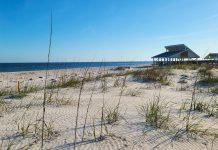
Not a high-rise in sight anywhere on the island. The dune profile is healthy, the sea oat coverage is visible across most of the island’s Gulf side, and the lighthouse rising above the tree line at the center gives the island a visual landmark without commercializing the skyline. The bay side adds a second layer of scenery that most barrier islands can’t match.
Birding and Wildlife
9/10
Nearly 300 species documented in the state park alone, with significant populations visible from the public beach too. Dolphins work the Gulf side year-round. Osprey nest on bay-side platforms. Sea turtle nesting runs May through October along the eastern end. Brown pelicans, least terns, snowy plovers, black skimmers, and willets are regular on the waterline. Bald eagles appear in winter along the bay side.
Family Friendliness
8/10
Wide, flat beach with gradual entry works very well for families. The lighthouse park has restrooms, a playground, and picnic tables. The bike path network makes it easy to cover the island without a car. The one significant minus: no lifeguards anywhere on the island, which changes the supervision calculation for families with young swimmers.
Dog Friendliness
7/10
Dogs on leash are welcome on all public beach stretches on the island, which is a meaningful advantage over beaches like Pensacola that restrict dogs to two specific lots. The state park is the exception: dogs are allowed in the campground, on nature trails, and on paved surfaces, but not on the park’s beaches. Plan your beach time with your dog on the public stretch.
Solitude and Peace
7.5/10
Even in peak season you can find long stretches of empty sand within easy walking distance of the lighthouse. The limited commercial development means there’s no manufactured noise to compete with. The eastern state park miles are as quiet as any Gulf beach in Florida. The only season where solitude genuinely gets harder is summer holiday weekends.
Entertainment and Nightlife
4/10
This is the category where St. George Island asks you to recalibrate your expectations. A handful of restaurants, a couple of bars, a few shops, and the lighthouse museum is genuinely all there is on the island after 9pm. If you need a boardwalk, live music venues, or anything resembling a nightlife scene, this is not your beach.
Parking and Beach Access
7/10
Free parking at the lighthouse park and at all numbered public access pulloffs along both Gulf Beach Drive corridors. The state park entrance fee of $6 per vehicle covers access to the eastern nine miles. The island’s limited roads mean parking is spread out across multiple low-key pulloffs rather than consolidated in a few large lots, which actually works in your favor for finding space on busy weekends.
St. George Island Sand & Water
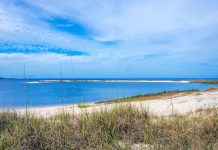
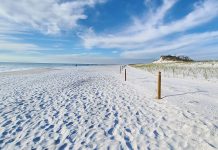
The sand here is wide, flat, and bright white, the kind of beach that makes walking feel effortless whether you’re headed to the water or just strolling the shoreline. Up near the dune line, it turns soft and a little deeper underfoot, comfortable for lounging, easy to dig into for a sandcastle once you add a little water, and forgiving if you’re setting up chairs or spreading out a blanket for the day. Down at the waterline, the sand firms up considerably, packed by the waves into a surface solid enough for a beach volleyball game, a long barefoot walk, or a kid building an ambitious drip castle without everything collapsing the second they let go. However you plan to spend your day here, the sand cooperates with the plan.
The water runs emerald to turquoise on a calm day, clear enough to see your feet in the shallows, and it shifts toward a more turbid green after any stretch of wind or a passing front. Entry is gradual almost everywhere along the public stretch, a wide, easy slope rather than a sudden drop-off, which makes it comfortable for wading in slowly and easy to keep an eye on kids as they go. There are no lifeguards anywhere on this island, so the posted flag is your real safety signal, take it seriously rather than treating it as a suggestion. Currents can pick up near Bob Sikes Cut at the island’s west end and around any inlet, so give those specific spots a wider berth if you’re not a strong swimmer.
- 🚶 Walkability Wide, flat, and firm at the waterline for miles in either direction from the lighthouse, one of the easier beaches on the Panhandle to just keep walking.
- 🏖️ Softness & Playability The upper beach is soft enough for comfortable lounging and forgiving enough for sandcastles once you add water, while the packed waterline holds up well for games and sports.
- 👣 Barefoot Comfort Genuinely pleasant most of the year, though the dry sand can get hot enough by midday in July and August that you’ll want sandals for the crossing to the water.
- 🌊 Swimmability Gradual entry and generally calm conditions make this an easy beach for casual swimming, just check the flag before you go in since there are no lifeguards, and be mindful of current near Bob Sikes Cut.
Want the full geology, grain composition, and the complete sand and water condition ratings? I broke it all down separately in Sand & Shore: St. George Island.
Dogs & Pet Accessibility
Are Dogs Allowed on the Sand? YES, LEASHED, ESSENTIALLY EVERYWHERE ON THE PUBLIC STRETCH.
This is one of the real advantages of St. George Island over many Panhandle beach towns that restrict dogs to one or two lots. Leashed dogs are welcome on the public beach along both East and West Gulf Beach Drive.
Where Dogs Are Allowed
- ✓The full public Gulf-side beach on both Gulf Beach Drive corridors, on a leash.
- ✓The lighthouse park grounds behind the beach.
- ✓Most of the island’s 17 miles of paved bike paths, leashed.
Where Dogs Are NOT Allowed
- ✗The entire beach inside Dr. Julian G. Bruce St. George Island State Park, at any access point. Dogs are welcome in the campground, on the nature trails, and on paved surfaces there, just not on the sand. Full detail in Hiking St. George Island State Park.
- ✗Inside the gated St. George Plantation, a private community with no public access regardless of pet.
Paws on the Ground Reality
This is a genuinely good dog beach. The water is gentle most days, the sand stays cool at the waterline even in summer, and the wide, uncrowded beach gives dogs room to actually run rather than dodge beach chairs. Bring your own fresh water since there’s none along either Gulf Beach Drive corridor, and plan your dog’s beach time here rather than saving it for a state park day trip, since the rules flip completely once you cross that gate.
One seasonal note that matters for every dog owner on this island: sea turtle nesting runs May through October along this entire stretch. Keep dogs leashed and well back from any marked nest, and avoid letting a dog dig anywhere near the dune line during these months.
Crowd Levels and the Overall Feel of St. George Island
St. George Island is busy on a relative scale that means something different here than at most Florida beach towns. The island that draws visitors with its low-density, no-high-rise character is not going to feel crowded the way Pensacola Beach or Panama City Beach feel crowded, but it does fill up its rental cottages and the lighthouse area does get active on peak summer weekends. The key difference from more developed beaches is that the crowd spreads across a long, wide beach and thins out fast in either direction from the lighthouse.
The visitor profile skews toward repeat visitors and families, people who have been coming to this island for years and know exactly which rental they want and which direction they walk. First-timers often go straight to the lighthouse area, spend their first morning there, and then figure out by afternoon that the real estate extends for miles in both directions with almost nobody on it.
Seasonal breakdown:
- Spring: Shoulder season with pleasant temperatures and light crowds. Good shelling conditions if any winter fronts stirred up the bottom.
- Summer: Peak season, particularly July 4 weekend when the island fills to capacity and parking near the lighthouse gets competitive. Weekdays in June and August are manageable. Water temperatures peak in late summer.
- Fall: The best window for most visitors. Warm water into October, dramatically reduced crowds after Labor Day, and the beginning of shorebird migration that turns the beach into a birding event in its own right.
- Winter: Very quiet. Many rental cottages are available at reduced rates. The fishing and birding in winter are both excellent. The beach feels like it belongs to whoever makes the effort to visit.
Who Is St. George Island Really For?
✓ Who Will Love St. George Island
-
Serious shellers who want the best combination of shell variety and volume on the Florida Panhandle, specifically the eastern public stretch and state park miles
-
Families who want wide, uncrowded beach with gradual Gulf entry and a lighthouse park that gives kids something to do when they need a break from the water
-
Dog owners looking for a Gulf beach where their dog can actually walk the waterline on a leash without being restricted to two designated lots
-
Birders and wildlife observers who want a beach where the animal life on the sand and in the water is part of the experience, not incidental to it
-
Beach walkers and hikers who want to cover real distance on firm, flat sand without being disrupted by concession stands, volleyball nets, or shoulder-to-shoulder beach chairs
-
Anyone who wants old Florida beach character without the development: cottage-scale rentals, one grocery store, a few good restaurants, and no resort towers in the sightline
✗ Consider Another Beach If…
-
You need reliable resort amenities: full-service restaurants, beach chair and umbrella rentals, beach bars, and nightlife within walking distance of your room
-
You need lifeguards in the water with you. There are no lifeguards on any section of the public beach or the state park beach. This is a real consideration for families with young children or uncertain swimmers.
-
You want something to do after 9pm. The island closes down at a sensible hour and stays that way.
-
You need strong cell phone coverage. The eastern state park area has essentially no signal, and coverage on the island’s western end can be spotty depending on your carrier.
-
You are driving more than four hours and want a guaranteed premium experience as a first-time visitor without doing research in advance. This island rewards people who understand what it offers and doesn’t offer before they arrive.
Things to Do at St. George Island, Florida
-
Beach Walking. Miles of firm, flat waterline from the lighthouse in both directions, connecting to the state park’s nine undeveloped miles to the east. Plan your morning walk east for the shelling. Plan an evening walk west for the quiet.
-
Shelling. This is one of the best shelling beaches in Florida. Walk the waterline in the hour after a tide cycle change, especially following any period of elevated wind or surf. Lightning whelks, horse conchs, calico scallops, olive shells, sand dollars, and auger shells are all realistic finds. Bring a lightweight bag and go early.
-
Climbing the Lighthouse. The Cape St. George Light is 89 feet with 92 steps to the top and 360-degree views of the island from the lantern room. The Keeper’s House Museum tells the full history of the lighthouse, which has been destroyed and rebuilt three times since 1833. Worth the climb.
-
Kayaking and Paddleboarding. The bay side of the island is excellent flatwater paddling territory. Rentals are available near the town center. The salt marsh edges, seagrass flats, and oyster bars along the bay side support blue crabs, a variety of wading birds, and occasional dolphins. This is a completely different experience from the Gulf side and worth the hour.
-
Fishing. Both the Gulf beach and Apalachicola Bay offer strong fishing. Surf anglers target pompano, whiting, redfish, and sea trout from the beach at dawn and dusk. Bay fishing for speckled trout and flounder on the grass flats is well regarded by locals. A Florida fishing license is required. The state park has two bay-side boat ramps for small craft under 24 feet.
-
Cycling. Seventeen miles of paved bike paths cover the island and let you move between the lighthouse, the rental cottage corridors, and the state park entrance without getting on a road. Bike rentals are available near the town center. This is the right way to experience the full length of the public stretch in a morning.
-
Wildlife Watching. Dolphins are a near-daily sighting from the Gulf-side beach on calm mornings, often working the surf line in small groups. Osprey nest on visible platforms along the bay side road. Sea turtle nesting runs May through October on the eastern end. Loggerheads are the primary species here.
-
Sunset Watching. The western end of the public beach and any open bay-side access point give you some of the better sunset views in the Panhandle because you are looking across water in both directions with almost no structural clutter in the sightline. The bay-side sunsets in particular, with the marsh silhouette and the Apalachicola estuary spread out in front of you, are worth building your evening around.
-
Birding. Bring binoculars. The wrack line holds sanderlings, willets, and ruddy turnstones working the foam. The bay side has herons, egrets, and osprey. Fall migration turns the state park into a layover site for warblers and raptors moving through. Bald eagles are a legitimate winter sighting along the bay shore.
-
Camping. The state park campground at the eastern end has 60 sites with electric and water hookups, plus two primitive sites accessible via the 2.5-mile Gap Point trail. Camping inside the state park puts you within a short walk of nine miles of undeveloped beach. Reserve through Florida State Parks up to 11 months in advance.
Local Knowledge and Practical Advice
A few things I’ve picked up walking this island in every season:
-
Arrive at the waterline before 8am if shelling is the goal. The high-traffic window at this beach starts around 9am in summer. A quiet beach and an outgoing tide in the early morning is when this island gives up its best shells, and you will not have to compete for the good ones.
-
Save yourself the cell signal frustration. Coverage on St. George Island is inconsistent, and once you are in the state park it drops to near-nothing. Download your offline maps before you cross the bridge. The campground has essentially no cell reception by design: it’s three miles past the park entrance gate.
-
Dog owners: the public beach allows your dog on leash, but the state park beach does not. The park allows dogs in the campground, on nature trails, and on paved surfaces. Plan your dog’s beach time on the public stretch between the lighthouse and the state park gate.
-
No lifeguards anywhere on this island. This is a consistent fact across both the public beach and the state park beach. The flag system at the lighthouse park is your swim-condition indicator. If the flag is anything other than green, take it seriously: there are no backup systems here.
-
Stock up before you cross the bridge. There is one small grocery store on the island (a Piggly Wiggly near the town center) and it has limited stock and limited hours. Eastpoint on the mainland has more options. If you are staying in a rental cottage for the week, do your full shopping at the Publix in Apalachicola or bring coolers from wherever you are driving from.
-
The state park boat ramps are natural, not paved, and restricted to shallow-draft vessels under 24 feet. If you are launching anything larger or heavier, plan to use a marina ramp on the mainland. The two park ramps are not maintained and require knowledge of local bay conditions.
-
Sea turtle nesting runs May through October. Remove all chairs, tents, and equipment from the beach by sunset. Use a red flashlight instead of white if you are on the sand after dark during nesting season. The eastern end of the island near the state park has the highest concentration of nests.
-
Reserve the state park campground well in advance. Reservations open 11 months out and popular summer weekends fill quickly. The campground is being expanded with 30 additional sites plus a new bathhouse, so capacity will improve, but demand is high. Don’t rely on walk-up availability in season.
-
The island is easier to cover by bike than by car once you arrive. The 17 miles of paved bike paths let you move between the lighthouse, the rental corridors, and the state park entrance without fighting road traffic or hunting for parking at each stop. Bike rentals are available near the town center.
-
Bug spray is not optional at the campground. The pine flatwoods environment in the state park, particularly the campground area near the dunes, is notoriously heavy with mosquitoes and no-see-ums after sunset. Bring a thermacell or a quality spray with DEET for evening hours. The beach itself is typically fine, but step into the vegetation line and the situation changes fast.
Where to Stay Near St. George Island, Florida
Accommodation on St. George Island is almost entirely vacation rentals, and that structure suits the island’s character well. There is no large resort to check into, which means you are looking for the right cottage or house rather than the right hotel floor.
Vacation Rental Cottages and Gulf-Front Homes
The dominant option on St. George Island is a privately owned cottage or beach house rented by the week or weekend. Properties range from modest two-bedroom cottages a short walk from the beach to large Gulf-front homes with private pools and private beach access. The rental inventory skews toward families traveling in groups. Rates vary significantly by location, size, and proximity to the Gulf, with Gulf-front properties commanding a premium that reflects the direct beach access. Book early for July and August, when the best properties go quickly after reservations open.
The Buccaneer Inn
The island’s one hotel-style accommodation is the Buccaneer Inn near the town center, which offers standard rooms without the full-service amenities of a resort. It suits visitors who want a shorter stay or who prefer not to manage a full rental home for a long weekend. It sits within walking distance of the lighthouse, the Blue Parrot, and the public beach access.
Camping at the State Park
The Dr. Julian G. Bruce St. George Island State Park campground at the eastern end of the island has 60 sites with electric and water hookups tucked into the pine flatwoods behind the dunes, plus two primitive sites at Gap Point accessible via a 2.5-mile trail or by water. The nightly rate is $24 base plus tax, a non-refundable $6.70 reservation fee, and a $7 nightly utility fee for sites with electric and water (utility fee does not apply to tent-only sites). Reserve through Florida State Parks reservations at least several weeks out in season.
Mainland Options: Eastpoint and Apalachicola
For lower nightly rates, the mainland town of Eastpoint sits just across the Bryant Patton Bridge and has limited motel-style lodging as a budget option for visitors who plan to day-trip to the island. Apalachicola, about 12 miles west, has a growing selection of boutique inns and bed-and-breakfasts in its historic district, giving you a different base that pairs a beach day on the island with evenings in one of the more interesting small towns on this coastline.
What Makes St. George Island Different from Nearby Beaches
No high-rise anything, and that’s deliberate
St. George Island is one of the few Florida barrier islands with a significant tourism economy that has never allowed high-rise development. The result is a skyline that looks like it did decades ago: sea oats, pine trees, cottage rooflines, and the lighthouse. This is not a regulatory accident. The island’s character has been protected enough by a combination of local zoning, its Forgotten Coast geography, and the size of the state park that the development pressure that built up Panama City Beach, Destin, and 30A’s condo corridor never fully arrived here.
The state park takes the entire east end
With the entire eastern nine miles of the island under state park protection, there is a hard boundary against development that grows the island’s natural character rather than competing with it. The state park is not a small green buffer at one end of a developed beach. It is the majority of the island’s eastern length, preserved permanently as undeveloped coastline. Very few barrier islands in Florida can make that claim.
Shelling in a league above most Panhandle options
St. George Island’s position near the Apalachicola River estuary brings more shell variety to the beach than the beaches further west. The combination of the river’s influence, the bay’s productivity, and the protected eastern end creates a shell inventory that places this beach in a different tier from Pensacola Beach, Navarre, or Destin for committed beachcombers.
The Apalachicola Bay experience alongside the Gulf
Almost every other barrier island along the Panhandle gives you Gulf beach and a sound or bay behind it that functions mostly as a visual backdrop. At St. George Island, Apalachicola Bay is one of the most ecologically significant estuaries in the southeastern United States and it shows in the fishing, the bird life, and the kayaking quality available from the north shore. Both sides of this island are active and interesting, which is not a common combination.
St. George Island vs. Other Florida Panhandle and Forgotten Coast Beaches
St. George Island vs. Cape San Blas
Cape San Blas is the closest comparison in character and feel: both are quiet, underdeveloped, and primarily cottage-rental destinations on the Forgotten Coast with strong wildlife. Cape San Blas has slightly more shell-and-calcium carbonate mixed into its sand as you move toward the peninsula tip, giving the beach a warmer tone than St. George Island’s brighter quartz. St. George Island wins on amenities, shelling volume, and the density of the state park offering. Cape San Blas wins on absolute solitude, particularly at the peninsula tip where the St. Joseph Peninsula State Park matches the isolation of St. George’s state park but with even fewer visitors.
St. George Island vs. Pensacola Beach
These two islands serve fundamentally different visitors. Pensacola Beach has a boardwalk, pier fishing, live music, resort hotels, and a crowd that arrives for all of those things. The sand quality is comparable, both are quartz-white Panhandle beaches. St. George Island wins on quiet, wildlife, shelling, and low development. Pensacola Beach wins on nightlife, dining, lifeguards, and having something to do every evening. Choose based on what you came for.
St. George Island vs. 30A (South Walton)
The 30A corridor towns like Seaside, Rosemary Beach, and WaterColor offer a curated beach experience with upscale dining, architecture, and rental homes designed by architects. St. George Island is the opposite of curated. It’s natural, low-key, and without pretension. The 30A sand quality is excellent but the development has layered on top of the beach experience in ways St. George Island has not. For the design-conscious visitor who wants a resort-quality environment with Gulf views, 30A is more likely to satisfy. For the visitor who wants the beach itself without the overlay, St. George Island is the answer.
St. George Island vs. Panama City Beach
These two beaches represent opposite ends of the Florida Panhandle development spectrum. Panama City Beach has more high-rise hotels, entertainment options, water parks, and tourist infrastructure than almost any beach in Florida. St. George Island has one small grocery store, a few restaurants, and no high-rises. The sand geology is related but not identical: Panama City Beach quartz is comparable in quality, but the experience around it is completely different. If you need something to do beyond the beach itself, PCB will keep you occupied. If the beach itself is enough, St. George Island is the better version of the same Gulf coast.
Bottom line: St. George Island is the best available version of an undeveloped Panhandle barrier island beach with a functional town and state park on the same island. It does not compete with the resort beaches. It does not try to. What it offers instead, which is miles of white sand, excellent shelling, extraordinary wildlife, and an old-Florida atmosphere that is getting harder to find, is genuinely rare.
St. George Island Beaches, Florida: Frequently Asked Questions
Is St. George Island worth visiting?
Yes, particularly for visitors who prioritize natural beach quality over resort amenities. The sand and wildlife are exceptional, the shelling is among the best in Florida, and the absence of high-rise development is genuinely unusual for a well-known Florida beach destination.
Are there lifeguards on St. George Island?
No. There are no lifeguards on any section of the public beach or the state park beach. The flag system at the lighthouse park area is your swim-condition indicator. Check it before entering the water and treat it seriously.
Are dogs allowed on St. George Island beaches?
Dogs on leash are allowed on all public beach stretches on the island, which is a notable advantage compared to many Panhandle beaches with strict dog restrictions. The state park is the exception: dogs are permitted in the campground, on nature trails, and on paved surfaces, but not on the park’s beaches.
What is the best time to visit St. George Island?
Late September through early November is my preferred window. The water is still warm, the crowds have largely left after Labor Day, shorebird migration is active, and the shelling is excellent after the season’s first fall fronts. Late spring, from April through early June, is the second-best window for similar reasons.
Is there an entrance fee at St. George Island?
The public beach around the lighthouse and along both Gulf Beach Drive corridors is free to access with free parking. The state park at the eastern end charges $6 per vehicle for 2 to 8 people, $4 for a single-occupant vehicle, and $2 for pedestrians and bicyclists. The park is open 8am to sundown every day of the year.
Is St. George Island good for shelling?
It is one of the best shelling beaches in Florida. The island’s position near the Apalachicola River estuary brings species variety that does not show up consistently on the beaches further west. Walk the waterline east of the lighthouse in the early morning following a tide change or a period of elevated surf for the best results.
Is St. George Island crowded?
By Florida beach standards, no. The lighthouse area sees the most activity on summer weekends, but the beach is wide enough and long enough that you can walk a short distance in either direction and thin out the crowd significantly. The state park’s eastern miles are among the least crowded Gulf beaches in Florida at almost any time of year.
What is the sand like at St. George Island?
White quartz sand, fine-grained and bright, part of the same geological formation that produces the white sand beaches of the western Panhandle. Shell content increases noticeably east of the lighthouse toward the state park, which is where the shelling quality improves. At the waterline the sand packs firm and flat for excellent walking.
Where can I stay on St. George Island?
Almost exclusively vacation rentals, ranging from modest two-bedroom cottages to large Gulf-front homes with private pools. The Buccaneer Inn is the island’s one hotel-style option near the town center. Camping is available at the state park campground with 60 electric and water sites plus two primitive sites. Reserve all options early for summer weekends.
How far is St. George Island from Apalachicola?
About 12 miles by road, or roughly 20 to 25 minutes from the island to the historic downtown of Apalachicola on the mainland. Eastpoint, the closest mainland town, sits just across the Bryant Patton Bridge and is less than five minutes from the island center.
Is St. George Island better than Cape San Blas?
They serve similar visitors but with notable differences. St. George Island has a functioning town, more amenities, better shelling volume, and the state park on the east end. Cape San Blas has more remote wilderness feel, particularly at the St. Joseph Peninsula State Park tip, and slightly less visitor traffic overall. Both are excellent. The right choice depends on how remote you want your base to be.
Patti’s Perspective: My Honest Take on St. George Island
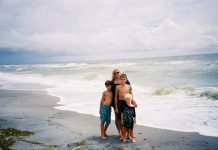
I crossed onto St. George Island early in my Florida journey, while the western Panhandle quartz beaches were still fresh in my legs and my memory. I hadn’t been to this beach since my kids were young, which was almost 20 years ago.
What surprised me most was how different this island felt even though the sand was clearly related to what I’d been walking further west in the panhandle. The white was the same white. But the island had a different quality of quiet, not the quiet of a beach that hasn’t been discovered, but the quiet of a place that figured out what it wanted to be and held that line. The lighthouse anchoring the center of the island instead of a hotel tower tells you everything about the choice this community made.
The shelling on this island is real, and the eastern stretch toward the state park gate is where I’ve found some of the more interesting specimens of my entire Florida walk. A horse conch, still with color in it, came out of the wrack line on a calm morning after an overnight front, and I stood there long enough holding it that the sanderlings got used to me and started working the foam at my feet. Those mornings on this island, early, quiet, walking east with the sun still low, are the ones I come back to when I need to remember why this mission started.
My honest note for anyone planning a first visit: the lighthouse area is the right introduction, but it is not the whole story. Walk east. Walk until the rental cottages thin out and the dunes on your left get taller and less groomed. That transition into the state park land is a shift you’ll feel before you see the entrance gate. The full story of what I found walking the state park’s nine miles along the waterline is in my hiking guide to St. George Island, which goes mile by mile through the terrain, the wildlife, and what the sand is doing at each section.
This island earns its national ranking. Not because it dazzles you on arrival, but because it accumulates on you over the course of a few days, the way the best beaches always do. You leave knowing what the water looked like at 7am, what the shells felt like in your hands, and what it means to walk a beach that doesn’t have anything to sell you.
My verdict: 7/10. One of the finest barrier islands in Florida, earning its reputation on sand quality, shelling, wildlife, and the absence of development. It loses points only on nightlife and evening amenities, and that is entirely by design. Come for the beach. Stay for the morning walks.
Want to Live by the Water on the Forgotten Coast?Franklin County real estate covers a range from modest cottage lots in the island’s central rental corridor to premium Gulf-front properties that compete with any beachfront market in Florida. The St. George Plantation at the western end of the island includes some of the most exclusive vacation homes on the Panhandle, while the public stretch between the lighthouse and the state park gate offers a mix of smaller cottages and newer builds at a range of price points.The mainland towns of Apalachicola and Eastpoint offer substantially lower entry prices for buyers who want proximity to the island without the island premium. Apalachicola’s historic district has attracted a small but growing population of remote workers and retirees drawn by the architecture, the water access, and the pace. Franklin County as a whole remains one of the more affordable coastal counties in Florida with Gulf access, with the understanding that services, grocery options, and healthcare infrastructure are limited compared to larger coastal markets.Explore Waterfront Living at LiveByTheWater.com
Real estate referral partner