



Ormond Beach, Florida
Ormond Beach carries itself like a place that already proved its point a century ago and doesn’t need to keep shouting about it. This is the Birthplace of Speed, where automobile land speed records were set before racing ever moved south to Daytona, and after walking every stretch of this sand I can tell you the beach itself tells its own quieter story, one written in orange.
Ormond Beach sits directly north of Daytona, sharing the same barrier island but none of the boardwalk energy. Automobile speed trials ran on this hard-packed sand starting in 1902, a full generation before racing moved south and eventually became Daytona International Speedway. You’ll feel that history downtown near The Casements, and you’ll feel it in a beach that stays noticeably lower-rise and quieter than its famous neighbor.
What surprised me most walking this beach block by block is how much the sand itself changes character as you move north. Down near Granada Boulevard, it looks close to what you’d find in Daytona. Push north into Ormond-by-the-Sea, toward Crotty Park and the town’s dog beach, and the sand turns noticeably coarser and more orange, the same coquina-tinted color Flagler Beach is famous for a little further up the coast. In this guide I’ll walk you through the distinct stretches of this beach, go deep on why that color shift happens, cover exactly where you can bring your dog, score it honestly, and tell you exactly who this beach suits. For more on what lives in this sand and what you might find washed up, I’ve also written a birding guide and a beach finds guide for this stretch. I cover a separate guide to North Peninsula State Park for the wild, undeveloped stretch at the very north end of this same barrier island, since it deserves its own full telling rather than a few paragraphs here.
The Vibe & Culture at Ormond Beach
The Older, Quieter Claim Behind Daytona’s Reputation
Ormond Beach has the historical bragging rights, and it wears them without needing to prove anything to you.
This is the Birthplace of Speed, where automobile land speed records were set on the hard-packed sand between 1902 and 1911, before racing moved south and eventually became Daytona International Speedway. You’ll feel that history downtown near The Casements, John D. Rockefeller’s restored winter home on the Halifax River, and along the Ormond Scenic Loop and Trail, a 30 mile double loop through river, marsh, and old Florida scrub that most Daytona visitors never think to drive.
The beach itself splits into two distinct moods. South of Granada Boulevard, near the main downtown corridor, low-rise hotels and a handful of small resorts line the sand, still nowhere near Daytona’s density but recognizably a beach town. North of Granada, in the unincorporated community of Ormond-by-the-Sea, the buildings thin out fast into older motels and beachfront homes, the crowd drops, and the sand itself starts showing more of the coarse, orange coquina character that gives this whole stretch its personality.
Seasonally, Ormond feels the ripple effect of Bike Week and Spring Break in late February and March, since traffic spills north along A1A from Daytona, but its own beach never turns into an event space the way Daytona’s does. Summer is peak family season at the town’s beachfront parks. Fall and winter bring the quietest, most comfortable walking, especially in the northern stretch toward the dog beach and the county line.
Ormond Beach Areas: Five Distinct Stretches
Here’s how this beach actually breaks down, south to north, and what you’ll find at each stop.
Ormond Central Beach & The Casements Corridor
Near Granada Boulevard · Main Public Access
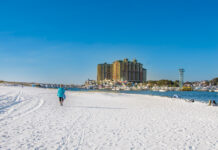
The first thing you notice arriving at Ormond’s main beach access points along Ocean Shore Boulevard is how much less vertical the skyline is compared to Daytona a few miles south. The sand here runs wide and firm, and while it carries some of the same warm tan tones as Daytona’s beach, you’ll already start noticing faint rust-colored patches mixed into the upper beach, the first hint of the coquina character that gets stronger the further north you walk.
The crowd skews local and repeat visitor rather than day-tripper. You’ll find residents on their morning walk, a handful of surfers working the break near the pier area, and visitors who’ve made Ormond their quieter home base for a Daytona area trip. It’s active without being loud, and even on a busy weekend it never feels like it’s straining at capacity the way the Daytona boardwalk does.
I like starting a visit here specifically because of what sits just across the Halifax River. A short drive inland gets you to The Casements, Rockefeller’s winter home turned cultural center, and to Billy’s Tap Room, reopening in 2026 after a renovation, which still displays historic photographs from the beach racing era. Walking the sand here with that history in mind changes how you see the whole stretch north of it.
Andy Romano Beachfront Park
839 S. Atlantic Avenue · South of Granada
South of the main downtown corridor, Andy Romano Beachfront Park is a four acre stretch built specifically around families. A splash pad, a playground, shaded pavilions, and a picturesque stone building framing the ocean give this spot a genuinely welcoming, low-key feel that punches above its size.
The sand here still carries the warmer, more typical tan tones you’d expect this close to the Daytona border, hard-packed enough for jogging or a beach cruiser, and the crowd stays almost entirely local families and a handful of surf students from the surf school based nearby. It’s rarely crowded even in season, and the shaded picnic areas make it an easy full-morning stop rather than a quick beach visit.
This is genuinely the park I point families toward when they ask where to go in Ormond specifically. It gives kids a break from the surf without needing to leave the beach, and it’s close enough to Tomoka State Park that you can turn a beach morning into a full day of Florida nature without much driving.
Tom Renick Park
1565 Ocean Shore Blvd. · Ormond-by-the-Sea
About 3.7 miles north of Granada Boulevard, Tom Renick Park marks the point where Ormond Beach starts to feel genuinely residential. Named for a longtime Volusia County Beach Safety Director who served as a lifeguard from 1969 until his death in 2001, this beachfront park offers a wheelchair-accessible wooden beach walkway, a padded-floor playground, sheltered picnic areas, restrooms, and outdoor showers, all set against dune vegetation thick with sea grapes, sea oats, and cabbage palms.
The sand at this point has visibly shifted from what you’d find further south. It’s coarser underfoot, and the rust-orange patches that were just hints near Granada Boulevard are impossible to miss here, especially right after the tide pulls back. The crowd is a comfortable mix of local families and repeat visitors who’ve found this park specifically for its wide beach and easy amenities, with a lifeguard on duty and a recently added parking fee that’s drawn some grumbling from longtime regulars.
I always recommend this stop to anyone who wants full facilities without the crowd of the main downtown beach. It’s the kind of park that feels cared for without feeling manicured, and the beach here is wide enough that even a busy day rarely feels cramped.
Michael Crotty Bicentennial Park
1800 N. Ocean Shore Blvd. · River to Ocean
Crotty Park is the stretch I somehow skipped the first time I wrote about this beach, and that was a mistake worth correcting. This 37 to 40 acre park stretches clear across the barrier island from the Halifax River to the Atlantic, and it does more for Ormond-by-the-Sea’s identity than almost any other single spot in town. A boardwalk winds through scrub habitat past a four-acre off-leash dog park, split into large and small dog sections, before reaching a fishing dock on the river side, while beachgoers park across A1A to reach the sand itself.
The sand here is some of the most visibly orange on this whole stretch, coarse and clearly coquina-influenced, the same rust-toned quartz-and-shell mix that gives Flagler Beach its cinnamon reputation further north. Gopher tortoises and raccoons live in the scrub along the nature trail, and the crowd splits between dog owners at the fenced park, anglers at the river dock, and a beach crowd that a longtime local once called never crowded, even after years of visiting.
This has become one of my favorite stops in Ormond specifically because it does three things at once, dog park, nature trail, and genuine beach access, in one place that never feels overrun. If you only add one stop to your Ormond itinerary after reading this, make it this one.
Ormond Beach Dog Beach
Rockefeller Drive to Milsap Road · Leashed Sand Access
This half-mile stretch of open Atlantic beach, not to be confused with the fenced dog park at Crotty a bit further south, made history in November 2023 as the first place in more than three decades where Volusia County allowed dogs directly onto the ocean sand. The pilot program became permanent in April 2025 after recording nearly 13,000 dog visits with no significant issues, and it now sits alongside Lighthouse Point Park and Smyrna Dunes Park as one of only a handful of true leashed dog beaches on this entire coast.
The sand here carries the same coarse, orange-tinted character as Crotty Park just to the south, and the crowd is almost entirely dog owners taking advantage of a stretch of coastline that spent 36 years off limits to their pets. Rules are straightforward: dogs must stay leashed at six feet or under, owners clean up immediately, and the dunes and wildlife stay off limits regardless of how excited a dog gets about them.
If you’re traveling with a dog anywhere near Daytona or Ormond, this is the stretch to know about. It’s a genuine, hard-won piece of coastline, and the fact that it took a three-decade campaign to get here makes walking it with a leashed dog feel like more than just an ordinary beach day.
Ormond Beach Rankings: Expert Scores Across 11 Categories
These scores weigh the full stretch from the Granada corridor north through Ormond-by-the-Sea, reflecting both the sand’s changing character and the town’s genuinely low-key personality.
Sand Quality
7/10
Coarser and more coquina-influenced than Daytona’s sand, especially north of Granada Boulevard, where it turns a distinctive rust-orange similar to Flagler Beach further up the coast. Firm and excellent for walking throughout.
Hiking & Beach Walking
8/10
Long, hard-packed, and genuinely pleasant the entire length, with the stretch north of Crotty Park feeling noticeably wilder as you approach the North Peninsula State Park boundary.
Shelling
5/10
Moderate, with more visible coquina and shell hash mixed into the sand itself than at Daytona. Worth a look after a storm, especially near Crotty Park.
Water Conditions
7/10
Typical Atlantic surf, generally a touch calmer than the busiest stretch of Daytona. Rip currents are still a real consideration, so check the flag at guarded parks like Tom Renick.
Scenery & Natural Beauty
7/10
Noticeably better than Daytona’s condo-lined center, thanks to a lower skyline and the orange-sand character that gives this stretch real visual distinction.
Birding & Wildlife
7/10
Gopher tortoises and raccoons at Crotty Park’s nature trail, sea turtle nesting May through October, and a genuine step up in habitat quality as you head north toward North Peninsula State Park.
Family Friendliness
8/10
Andy Romano’s splash pad, Tom Renick’s padded playground and lifeguard, and Crotty Park’s sports fields give families genuine options up and down this whole stretch.
Dog Friendliness
9/10
One of the best dog destinations on this entire coast. A genuine leashed ocean beach from Rockefeller Drive to Milsap Road, plus the fenced off-leash dog park at Crotty a bit further south.
Solitude & Peace
6/10
Genuinely quiet compared to Daytona, especially the further north you go. The main Granada corridor stays busier than Ormond-by-the-Sea’s more residential stretch.
Entertainment & Nightlife
4/10
Modest by design. A handful of good restaurants near Granada Boulevard, but nothing resembling Daytona’s boardwalk scene, and this town doesn’t want it to.
Parking & Beach Access
7/10
Numerous access points throughout, though daily parking fees now apply at most beachfront parks, a recent change that’s drawn some pushback from longtime regulars.
Ormond Beach Sand & Water
Ormond Beach’s sand runs wide and flat nearly its whole length, firm enough at the waterline for a long walk, a jog, or a bike ride without your feet sinking in. Up near the dunes the dry sand softens up, soft enough for a proper sandcastle once you add water, and you’ll notice the texture shift the further north you go, a little coarser and grainier as you move into Ormond-by-the-Sea. It’s an easy, walkable beach from one end to the other, wide enough that even a busy weekend rarely feels cramped.
The water here runs green to blue-green on a calm day, gradual to wade into, and generally a touch calmer than the busiest stretch of Daytona just south. Conditions shift more with the wind than the calendar, and while this stretch doesn’t see the wild swings some Atlantic beaches do, rip currents are still a real risk here, so stick to guarded parks like Tom Renick when you can and check the flag before you go in past your knees.
-
Walkability. Firm, flat sand runs the length of this beach. Easy for a long walk or a bike ride at any access point covered in this guide.
-
Softness & Playability. Firm at the water’s edge, softer and a bit coarser up near the dunes the further north you go. Good for sandcastles once you add water.
-
Barefoot Comfort. Comfortable most of the year at the waterline, though the coarser sand north of Granada Boulevard feels a bit rougher underfoot than the finer sand near downtown.
-
Swimmability. Good at guarded parks like Tom Renick, with gradual entry and generally moderate surf. Rip currents are a real risk elsewhere, so check the flag first.
Want the full geology, grain composition, and the complete sand and water condition ratings? I broke it all down separately in Sand & Shore: Ormond Beach.
Dogs & Pet Accessibility at Ormond Beach
Are Dogs Allowed on the Sand? YES.
Ormond Beach offers some of the best dog access on this entire coast, with a genuine leashed ocean beach and a separate off-leash dog park nearby.
Where Dogs Are Allowed
- ✓The half-mile leashed dog beach running from Rockefeller Drive to Milsap Road, made permanent in April 2025 after a successful pilot program.
- ✓Michael Crotty Bicentennial Park’s four-acre fenced off-leash dog park, split into large and small dog sections, a short drive south of the beach itself.
- ✓The nature trail and river dock at Crotty Park, on a leash, for a shaded walk beyond the beach.
Where Dogs Are NOT Allowed
- ✗The main beach corridor near Granada Boulevard and Andy Romano Beachfront Park, both off limits to pets outside of service animals.
- ✗Tom Renick Park’s guarded swimming beach, which does not permit dogs on the sand.
Paws on the Ground Reality
Bring your own water bowl for the beach itself, since there’s no dedicated pet water station on the sand, though Crotty Park’s dog park has shaded areas to cool off between rounds of fetch. The sand along the leashed beach stretch runs coarser than downtown, from all that coquina content, but it’s not sharp or uncomfortable, just a bit grittier underfoot than a dog used to finer sand might expect. Volusia County took the leash and cleanup rules seriously from the start of the pilot program, and after nearly 13,000 recorded visits without a significant issue, the rules are still enforced closely: a six-foot leash maximum, immediate cleanup, and dogs kept off the dunes.
If your dog needs more room to run before or after the beach, Crotty Park’s off-leash dog park a short drive south is the better option for real exercise.
Crowd Levels and the Overall Feel of Ormond Beach
Compared with Daytona a few miles south, Ormond runs noticeably quieter, and it holds that quiet even during Bike Week and Spring Break, when traffic spills north along A1A without the beach itself turning into an event space.
You’ll find a different crowd depending on where you stand. Near Granada Boulevard it’s a mix of residents, repeat visitors, and day-trippers up from Daytona. Further north in Ormond-by-the-Sea, it’s almost entirely locals, dog owners, and visitors who’ve specifically sought out the quieter, more textured version of this beach.
The overall feel shifts gently by season and event:
- Late February into March: Bike Week and Spring Break traffic spills north from Daytona, though the beach itself stays calmer than its neighbor
- Summer: peak family season at Andy Romano and Tom Renick Parks, with the warmest water of the year
- Fall: my favorite window here, warm water lingering with a fraction of the summer crowd
- Winter: quiet and cool, especially in the northern stretch toward the dog beach and county line
Who Is Ormond Beach Really For?
✓ Who Will Love Ormond Beach
-
Dog owners looking for genuine leashed access to open ocean sand, one of the best such stretches on this entire coast
-
History lovers who want the older, quieter story behind Daytona’s racing reputation, told at The Casements and the Birthplace of Speed markers
-
Anyone curious about Florida’s coquina sand geology, since this stretch shows the color transition from typical tan to true orange more clearly than almost anywhere else
-
Families wanting genuine beachfront amenities, splash pads, playgrounds, and lifeguards, without a boardwalk crowd
-
Cyclists and paddlers drawn to the Ormond Scenic Loop and Trail and the river access points at Crotty Park
-
Anyone who wants Daytona’s convenience nearby without staying in the middle of its busiest stretch
✗ Consider Another Beach If…
-
You want boardwalk energy, arcades, or nightlife on the scale of Daytona. This town intentionally doesn’t offer that
-
You want the finest, palest sand in Florida. This stretch runs coarser and more coquina-flecked, especially heading north
-
You’re looking for true wilderness. Head to North Peninsula State Park just north of here for that experience instead
-
You’re a dedicated sheller chasing a high hit rate. Shelling here is moderate at best, mostly rewarding right after a storm
-
You want to avoid parking fees entirely. Most beachfront parks in Ormond now charge, a recent shift from years past
-
You want to avoid crowds entirely during Bike Week or Spring Break, since traffic still spills north from Daytona during those weeks
Things to Do at Ormond Beach, Florida
Between the sand, the river, and the history, Ormond Beach fills a day at a noticeably slower pace than Daytona a few miles south. Here’s what actually works.
-
Dog Beach Walking. The half-mile leashed dog beach from Rockefeller Drive to Milsap Road is one of the best on this coast, and Crotty Park’s fenced off-leash dog park offers a second option nearby.
-
Historic Sightseeing. The Casements, Rockefeller’s restored winter home, and the Birthplace of Speed markers downtown tell the real history behind this coast’s racing reputation.
-
Beach Walking. Firm, hard-packed sand runs the length of this beach, with the color and texture shifting noticeably as you head north into Ormond-by-the-Sea.
-
Cycling the Scenic Loop. The 30 mile Ormond Scenic Loop and Trail connects the river, marsh, and old Florida scrub inland from the beach, with a bicycle maintenance station at Crotty Park.
-
Fishing. Surf fishing works well along the open beach, while Crotty Park’s Halifax River dock offers a completely different, calmer fishing experience.
-
Wildlife Watching. Gopher tortoises and raccoons live in the scrub habitat at Crotty Park, and sea turtle nesting runs May through October along the open beach.
-
Swimming. Tom Renick Park offers lifeguard coverage and a padded-floor playground, making it one of the more reliable family swimming spots on this stretch.
Local Knowledge and Practical Advice
A few things I’ve picked up walking this beach more times than I can count:
-
Bring the dog north to Rockefeller Drive or Crotty Park. These are two of the only real dog-friendly beach options anywhere in the greater Daytona area.
-
Look closely at the sand once you’re past Granada Boulevard. The orange coquina color is easy to miss if you’re not paying attention, but it’s genuinely one of the more interesting details on this whole beach.
-
Budget for parking at most beachfront access points now. Fees have become more common in recent years, including at Tom Renick Park, where longtime regulars have noticed the change.
-
Pair a beach morning with The Casements. It’s a short drive from the sand and gives real context to why this stretch of coast mattered before Daytona International Speedway existed.
-
Nesting season runs May through October. Keep beachfront lighting dim after dark and give any marked nest a wide berth.
-
Use Crotty Park’s bike maintenance station if you’re riding The Loop. It’s a small, genuinely useful touch for cyclists working the full 30 mile route.
-
Check whether Billy’s Tap Room has reopened before planning a visit. This historic Ormond restaurant, dating to 1922, is under new ownership with a 2026 reopening planned.
-
Walk north past Crotty Park if you want to see North Peninsula State Park’s undeveloped stretch. It’s a genuinely different experience from the rest of Ormond, and it earns its own separate guide.
Where to Stay Near Ormond Beach, Florida
Lodging here runs smaller-scale and generally less expensive than comparable Daytona properties. Here’s how it breaks down.
Granada Corridor Oceanfront
Smaller motels and low-rise hotels line Ocean Shore Boulevard near the main beach access points, including new inventory like the Residence Inn by Marriott projected to open in summer 2026. Several offer easy walking distance to Andy Romano Beachfront Park.
Ormond-by-the-Sea Vacation Rentals
Beachfront homes and smaller condo buildings north of Granada Boulevard put you closer to Tom Renick Park, Crotty Park, and the dog beach, generally at lower rates than the main corridor.
Camping
Tomoka State Park, just west of Ormond Beach along the Tomoka River, offers shaded campsites with electric hookups and is the closest camping option to this beach.
Daytona Beach & Inland Volusia County
For a wider range of budget hotel options, Daytona Beach itself sits a short drive south, and inland corridors toward DeLand offer even lower rates.
What Makes Ormond Beach Different from Nearby Beaches
Ormond Beach stands apart from Daytona for one reason above all others: it holds the older, quieter claim to this coast’s racing history, and its sand tells a genuinely different geological story the further north you walk.
A few other features make it distinct:
The oldest speed trials on this coast
Ormond Beach set automobile land speed records more than a decade before Daytona International Speedway existed, a history that predates the version most visitors associate with this coast.
Sand that changes color as you walk
Few beaches let you watch the sand shift from typical tan to true orange over just a few miles, a direct result of the coquina-rich Anastasia formation running beneath this stretch.
Real leashed dog access to open sand
The half-mile stretch from Rockefeller Drive to Milsap Road is one of only a handful of true dog beaches anywhere in the greater Daytona area.
Ormond Beach vs. Other Florida Atlantic Beaches
These are the beaches visitors most often weigh against Ormond Beach, and the honest read on when you’d choose one over the other.
Ormond Beach vs. Daytona Beach
Daytona Beach sits directly south and offers the boardwalk, the pier, and the ability to drive onto the sand. Choose Daytona for the energy and events. Choose Ormond for the same coastline with the crowd and the noise removed.
Ormond Beach vs. North Peninsula State Park
North Peninsula State Park sits just north of Ormond-by-the-Sea and trades every remaining amenity for genuine, undeveloped wilderness. See my separate guide to that park for the full picture.
Ormond Beach vs. Flagler Beach
Flagler Beach sits further north and shares the same coquina-influenced orange sand, but with an even smaller-scale downtown and a narrower beach. If you love what you see of the orange sand in Ormond, Flagler is worth the extra drive.
Bottom line: Ormond Beach gives you Daytona’s sand quality and history with the volume turned down, plus a genuinely distinct geological story written right into the color of the beach itself. Daytona gives you the energy. North Peninsula gives you the wilderness. Flagler gives you more of the same orange sand with even less crowd. Ormond sits comfortably in the middle of all three.
Ormond Beach, Florida: Frequently Asked Questions
Is Ormond Beach the same as Daytona Beach?
No. Ormond Beach is its own city directly north of Daytona, with a distinct history as the Birthplace of Speed, where automobile speed trials actually predated Daytona’s own racing reputation by roughly a decade.
Why is Ormond Beach’s sand orange in places?
The color comes from coquina shell fragments that have absorbed iron oxide over time, part of the Anastasia formation that runs beneath this coast from St. Augustine to Boca Raton. The effect gets stronger the closer you get to the Flagler County line.
Are dogs allowed on the beach in Ormond Beach?
Yes, on a designated half-mile stretch of open sand from Rockefeller Drive to Milsap Road, leashed at all times. Michael Crotty Bicentennial Park also offers a separate fenced off-leash dog park nearby.
Is Ormond Beach crowded?
Generally no, especially compared to Daytona a few miles south. Traffic increases during Bike Week and Spring Break as it spills north from Daytona, but the beach itself stays calmer than its neighbor.
What is Crotty Park in Ormond Beach?
Michael Crotty Bicentennial Park is a 37 to 40 acre park stretching from the Halifax River to the Atlantic Ocean, with a four-acre off-leash dog park, nature trails through scrub habitat, sports fields, and beach access across A1A.
Is Ormond Beach good for families?
Yes, particularly at Andy Romano Beachfront Park’s splash pad and Tom Renick Park’s lifeguard-covered swimming area and padded playground.
What is the best time of year to visit Ormond Beach?
Fall offers the best mix of warm water and thin crowds. Summer brings the warmest water and the busiest family season at the town’s beachfront parks, while winter is the quietest, coolest stretch of the year.
Does Ormond Beach charge for beach parking?
Yes, at most beachfront parks now, including Tom Renick Park, where a recently added fee has drawn some pushback from longtime visitors. Budget for parking regardless of which access point you choose.
Is Ormond Beach’s sand the same as Daytona’s?
Not quite. Both share the same quartz base, but Ormond’s sand, especially north of Granada Boulevard, carries noticeably more coquina shell content and a coarser, more orange-tinted texture, closer to what you’d find at Flagler Beach.
Is North Peninsula State Park part of Ormond Beach?
It sits just north of Ormond-by-the-Sea on the same barrier island, but it’s a separate state park with its own undeveloped character. See my dedicated guide to North Peninsula State Park for the full details.
Patti’s Perspective: My Honest Take on Ormond Beach
I owe this beach a small correction, and I’d rather make it directly than pretend my first pass got everything right. When I first wrote about Ormond Beach, I treated its sand as basically the same story as Daytona’s, and that undersold what’s actually happening under your feet the further north you walk. This sand has its own geological identity, and once you’ve noticed the orange coquina patches at Crotty Park or the dog beach, you can’t walk this stretch the same way again.
What strikes me most about Ormond is how little it needs to prove. This beach set land speed records before Daytona ever raced a car, and yet it carries that history quietly, a historical marker here, a restored garage site there, rather than turning it into a spectacle. The same goes for the sand itself. It doesn’t announce its coquina content the way Flagler Beach does further north, but once you know to look for it, that rust-orange color becomes one of the more genuinely interesting details on this whole barrier island.
Crotty Park deserves special mention here, since missing it the first time around was a real oversight on my part. River to ocean, dog park to nature trail, it’s the single spot in Ormond that best represents what makes this town worth a slower visit than its famous neighbor gets.
My verdict: 7/10. A quieter, more texturally interesting version of this barrier island’s sand and history, with the best dog access on this whole coast and a color story that most visitors never think to look for. Walk it slowly, and look down more than you’d expect to.
Want to Live by the Water?Ormond Beach offers some of the more accessible oceanfront real estate on this stretch of Florida’s Atlantic coast, from low-rise condos near Granada Boulevard to beachfront homes further north in Ormond-by-the-Sea.The market here draws retirees, remote workers, and buyers who want Daytona’s convenience nearby without living in the middle of its busiest stretch. Ormond-by-the-Sea in particular appeals to buyers drawn to the quieter, more residential character of the northern beach.If living by the water is something you’re considering, whether full time, part time, or as an investment, it’s worth exploring what’s available in this area.Explore Waterfront Living at LiveByTheWater.com
Real estate referral partner