



St. Augustine Beaches, Florida
St. Augustine Beaches is the one guide in this whole series where the sand is almost beside the point. You’re standing where the oldest continuously occupied European-founded city in the country meets the Atlantic, where a nearly 350-year-old Spanish fort still faces the water it was built to defend, and where a stretch of that same coastline once mattered enough to the entire country that Martin Luther King Jr. came and stayed on it. I’ve walked this corridor more times than almost any other in Florida, and it still gives me something new every visit.
Here’s the thing almost every first-time visitor gets tangled up on, and I want to clear it up before we go any further. Downtown St. Augustine, the historic district with the fort, the cobblestone streets, and the horse-drawn carriages, sits on Matanzas Bay, not on the ocean. It isn’t a beach town in the literal sense. The actual beaches sit a short drive east across the Bridge of Lions or the Vilano Bridge, on Anastasia Island, in the separate town of St. Augustine Beach and the unincorporated communities of Butler Beach and Crescent Beach further south. Once you understand that split, this entire region makes a lot more sense, and you stop wasting a morning looking for sand in the historic district.
In this guide I’m covering the full corridor: the main beach at the St. Johns County Ocean Pier, the local surf scene around A Street, Butler Beach and the civil rights history that makes it one of the more important stretches of coastline in this country, and Crescent Beach further south with its quieter, old Florida character. I’m also covering the St. Augustine Lighthouse and the walk out to it, and giving you my honest, off-beach take on downtown St. Augustine and the fort, since no trip to this beach corridor is complete without crossing back over the bridge at least once.
I’ll go deep on what the sand and water are actually doing along this stretch, score it honestly across every category that matters, tell you exactly who this beach corridor fits best and who might want a quieter stretch of this coast instead, and cover exactly where you can bring your dog along this corridor. I close with my honest take on what this place taught me, and the one afternoon here I still think about more than almost anywhere else I’ve covered.
The Vibe & Culture at St. Augustine Beaches
A Beach Town Standing in the Shadow of a Much Older City
Most Florida beach towns invented their identity sometime in the last hundred years. This one inherited its identity from a city that’s been standing since 1565, and you feel that difference the moment you cross the bridge.
St. Augustine was founded by Spanish admiral Pedro Menéndez de Avilés more than fifty years before the Pilgrims landed at Plymouth Rock, and the beach towns that eventually grew up on Anastasia Island were always going to exist in the shadow of that history, whether they leaned into it or not. St. Augustine Beach leaned into it. Walk A1A Beach Blvd near the pier and you’ll find surf shops and casual seafood spots sitting a short drive from a genuine Spanish colonial fort, a working 19th-century lighthouse, and a historic district that draws visitors from across the world. Very few beach towns in Florida get to borrow this much gravity from the city next door.
That gravity runs deeper than architecture. In the summer of 1964, this stretch of coast became one of the true flashpoints of the American Civil Rights Movement. St. Augustine’s segregated beaches, this one included, became sites of organized wade-in protests, where Black demonstrators tried to peacefully enter whites-only water and were met, more than once, with violence. Martin Luther King Jr. and his staff were in town that summer, staying at a beach hotel owned by a local Black businessman named Frank B. Butler a few miles south of here. I go deep on that history in the Butler Beach section below, because it deserves more than a passing mention, and because it’s part of what makes this coastline different from every other beach in this guide.
The present-day feel of St. Augustine Beach itself is warm, casual, and genuinely local, closer to a surf town than a resort town. Buildings along the beachfront cap out at 35 feet, so nothing blocks the sky, and the crowd mixes college-age surfers checking the break at dawn, retirees walking dogs along the hard-packed sand, and families working their way from the splash park to the pier to an ice cream shop without ever getting back in the car. Head south past Butler Beach into Crescent Beach and the whole feel changes again, quieter, more residential, the kind of place people describe as old Florida because there’s genuinely very little new Florida in it.
Seasonally, this corridor stays busy nearly year-round thanks to the historic district pulling in visitors regardless of beach weather, but the beach crowd itself follows a more familiar Florida pattern. Spring and fall bring the best combination of good surf and manageable crowds. Summer is peak season, loud in a good way near the pier, and quiet within a few miles south of it. Winter brings St. Augustine’s famous Nights of Lights to downtown, visible from the lighthouse tower if you time a visit right, while the beach itself turns cold, windy, and largely empty except for a handful of surfers who know this is often when the swell gets good.
St. Augustine Beaches: Six Stops Along the Corridor
This corridor runs from the pier at the north end of St. Augustine Beach down through Butler Beach and into Crescent Beach, with the lighthouse and downtown St. Augustine sitting just across the water as essential, if technically off-beach, parts of the trip. Here’s how I break the whole area down after years of covering it.
St. Johns County Ocean Pier & Main Beach
350 A1A Beach Blvd · The Anchor of the Whole Corridor
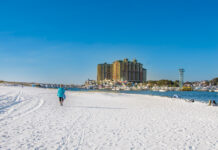
This is the beach most people mean when they say St. Augustine Beach, and it earns that reputation. The St. Johns County Ocean and Fishing Pier, first built in 1939 and rebuilt more than once since, most recently reopening in 2023 after Hurricane Matthew damage, stretches out over the water and anchors a four-acre beachfront park with a splash pad, sand volleyball courts, restrooms, and a gift shop. The sand here runs a smooth, hard-packed cocoa color that sometimes catches a cinnamon shine in the right light, genuinely different from the paler sand further north on this coast, and it’s ideal for a beach cruiser ride up and down the shoreline.
The crowd at the pier is the busiest and most mixed in this entire guide, families posted up near the splash park, surfers working the break just off the pilings, anglers fishing from the pier itself, and a steady flow of downtown visitors who made the short drive over for a beach afternoon. It’s genuinely lively without tipping into the kind of crowd you’d find at a bigger Florida beach town, and buildings staying under 35 feet keeps the whole scene feeling low-key even on a packed July day.
A quick, practical note before you plan around the pier itself: as of mid-2026 it’s closed to fishing and sightseeing for a piling repair project expected to run into November, with a required 500-foot buffer for swimmers and surfers near the structure and the northern beach access point closed for the duration. Everything else, the splash park, the beach, the Wednesday farmers market, stays open and unaffected. I’d still make this your first stop. It’s the easiest, most complete beach experience on this whole stretch of coast.
A Street & the Local Surf Corridor
A Street to 2nd Ave · Drive-On Access, Real Surf Culture
A few blocks south of the pier, the stretch around A Street is where St. Augustine’s actual surf community lives, not just visits. This is a genuine drive-on beach access point, so you can pull a 4WD vehicle right up to the waterline and post up for the day with your board an arm’s length away, and it sits close enough to Surf Station and Pit Surf Shop, two local institutions, that you can rent or buy exactly what you need on your way in.
The crowd here is younger, more local, and more dialed into conditions than anywhere else in this guide. Surfers wake up early, check the cameras or just drive the beach looking for a break, and the community itself has a genuinely good reputation, welcoming to visitors who show basic lineup etiquette. Fall is when this stretch really comes alive, since hurricane season swell often produces the most consistent waves of the year here.
My honest take, even if you don’t surf, this is worth a stop for the energy alone. Grab tacos from one of the walk-up spots near the surf shops, watch the lineup for twenty minutes, and you’ll understand something about this town that the pier crowd doesn’t fully show you.
Butler Beach: Where History Meets the Shoreline
Frank B. Butler County Park · A Beach That Changed a Movement
I want to slow down for this one, because Butler Beach carries more weight than almost any other stop in this entire series of guides. In 1927, a Black businessman named Frank B. Butler, frustrated that Florida’s beaches were legally restricted to white use, began buying oceanfront land on Anastasia Island stretching between the Atlantic and the Matanzas River. What he built became, according to contemporary newspaper accounts, the only beach open to Black Floridians between Jacksonville and Daytona Beach. He named the streets after the women in his family, ran a resort with cafes and cottages, and turned this stretch of sand into a genuine gathering place for Black communities across the region for decades.
In the summer of 1964, that history collided directly with the national Civil Rights Movement. Martin Luther King Jr. and members of his staff stayed at Butler’s beach hotel while organizing in St. Augustine, and one of the more haunting images from that era was taken inside a cottage here, showing Dr. King examining a bullet hole in a window. Just a mile up the shoreline at St. Augustine Beach, organized wade-in protests brought Black demonstrators into the whites-only surf that June, and on June 25, roughly 500 white counter-protesters attacked a group of 75 Black activists attempting to integrate the beach. Ten protesters on each side were arrested. These demonstrations, ugly and painful as they were, are widely credited as part of what pushed the 1964 Civil Rights Act toward passage that same summer.
Frank Butler died in 1973, and without his continued advocacy, the resort fell into disrepair. In 1980, the land passed to St. Johns County with the agreement that it carry his name permanently, which is why you’ll find Frank Butler Park East and Frank Butler Park West here today, along with quiet street names, Mary, Minnie, Gloria, that still honor the women in his life. The beach itself is genuinely lovely on its own terms, soft white sand, a healthy population of gopher tortoises in the dune line, and some of the best sunset walks on this entire coast, but knowing what happened here changes how you walk it.
The crowd today is thin and local, mostly people who live nearby and know the history, plus the occasional visitor who’s made a point of coming specifically for it, including guided history walks the county runs periodically through the park. My honest take, don’t skip this stop for a beach with more amenities. This is one of the more important few hundred yards of coastline in the entire country, and it deserves your time even if you never touch the water.
Crescent Beach
Old Florida, Wide and Quiet
Keep heading south past Butler Beach and the whole character of the coast shifts again. Crescent Beach takes its name from the broad, natural curve the shoreline carves as it meets the Atlantic, and it has a reputation among locals as the quiet cousin to the busier beach up at the pier. It’s wide, the parking is easy and uncrowded, and the sand runs hard-packed enough in places that beach cruisers with thick tires glide over it easily, which is exactly why an HGTV show once filmed its opening beach-bike shot right here.
The crowd skews toward residents, repeat visitors from Gainesville and Georgia who’ve been coming for years, and families who specifically want a quieter alternative to the pier scene a few miles north. A handful of local restaurants and bars, the kind that have been serving the same regulars for decades, sit near the Cubbedge Road intersection with A1A, and it’s easy to drive straight through this stretch without realizing you’ve passed a beach town at all.
I’ve stayed in this area more than once specifically because it’s the version of St. Augustine’s coast that feels the least performed for visitors. My honest take, if you want the historic district’s gravity during the day and a genuinely quiet, unhurried beach at night, Crescent Beach is where I’d point you, not the pier.
The St. Augustine Lighthouse & The Walk Out to the Pier
100 Red Cox Drive · Not on the Beach, but Essential to It
The St. Augustine Lighthouse & Maritime Museum isn’t technically on the beach, it sits on Anastasia Island overlooking both Matanzas Bay and the Atlantic, but no trip to this corridor is complete without it. This 165-foot tower, first lit in 1874 on the site of Florida’s original Spanish watchtower, is still an active aid to navigation today, and climbing its 219 steps is one of the better ways to physically understand how this whole geography fits together, the barrier island, the inlet, the bay, and the historic district all visible from one spot.
The walk itself is part of the experience. From downtown, you cross the Bridge of Lions onto Anastasia Island, and the lighthouse sits a short distance further along a quiet, tree-lined road that most tourists driving straight to the beach never bother to take. I’ve made this walk more times than I can count, and the payoff at the top, the whole curve of this coast laid out below you, is worth the climb every single time. I’ve written a full separate hiking guide covering this exact route, from downtown across the bridge to the lighthouse grounds, since it deserves more detail than I can give it here.
The crowd here is steady rather than overwhelming, families climbing the tower, photographers timing their visit for late afternoon light, and a genuine contingent of ghost tour enthusiasts after dark, since the lighthouse has a reputation as one of the more haunted sites in a genuinely haunted city. My honest take, budget at least two hours here if you’re climbing the tower and touring the keeper’s house. It’s not a quick stop, and it shouldn’t be treated like one.
Downtown St. Augustine & Castillo de San Marcos
Off the Beach, but Never Optional
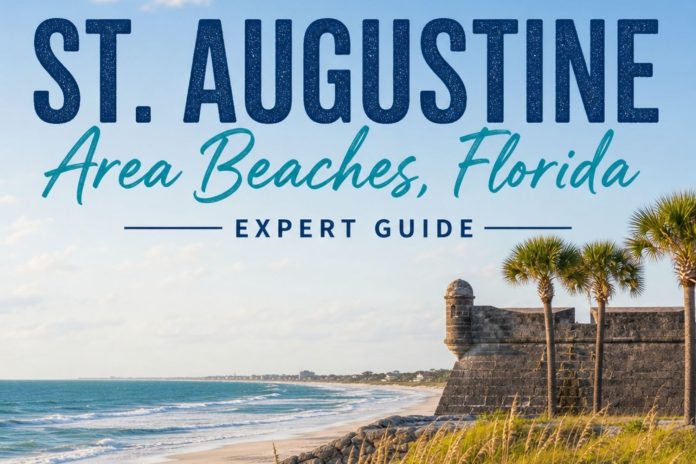
This is the section I include even though, strictly speaking, none of it sits on sand. Downtown St. Augustine faces Matanzas Bay, not the Atlantic, and its centerpiece is the Castillo de San Marcos, a Spanish fort built between 1672 and 1695 from coquina quarried on Anastasia Island, the same stone that makes up so much of the sand and shoreline in this entire guide. Walking its ramparts and casemates, you’re standing inside the literal building blocks of this coast.
The fort carries its own connection to the civil rights history I covered at Butler Beach. In 1964, a large oak on the fort’s green, known locally as the Freedom Tree, became a regular gathering point for demonstrators who weren’t welcome on the private property directly across the street. It’s a small, easy-to-miss detail among the fort’s Spanish colonial history, and I think it’s one of the more important ones.
Beyond the fort, downtown St. Augustine is genuinely worth a full day on its own. St. George Street runs pedestrian-only past centuries-old buildings now holding shops, cafes, and small museums. The Bridge of Lions connects the historic district to Anastasia Island. King Street holds a livelier evening scene, bars and live music spilling out past dinner hour, and from November through January the entire district transforms for Nights of Lights, one of the more genuinely spectacular holiday displays I’ve seen anywhere in this country.
My honest take, don’t treat downtown as a rainy-day backup plan for your beach trip. Give it its own dedicated day. The beach corridor and the historic district are genuinely two different destinations sharing one address, and trying to squeeze both into a single afternoon shortchanges them both.
St. Augustine Beaches Rankings: Expert Scores Across 11 Categories
These scores weigh the corridor as a whole, from the busy pier down through the quiet stretches at Butler and Crescent Beach, since the experience genuinely changes that much depending on where you park.
Sand Quality
7/10
Smooth, hard-packed cocoa-toned sand near the pier, turning softer and whiter the further south you go into Butler and Crescent Beach. Good for biking and walking throughout.
Hiking & Beach Walking
8/10
A long, genuinely varied corridor to walk, from the lively pier down through increasingly quiet stretches at Butler and Crescent Beach. The hard-packed sand makes long walks comfortable.
Shelling & Shark Teeth
6/10
Decent, especially after storms, but this corridor isn’t the specialized shelling destination that Vilano or Ponte Vedra further north is.
Water Conditions
7/10
Genuinely good, consistent surf around A Street and the pier, generally swimmable conditions with seasonal lifeguards, and real rip current risk that deserves respect.
Scenery & Natural Beauty
7/10
More developed near the pier, genuinely scenic and dune-lined further south, with the lighthouse and historic skyline adding a backdrop few Florida beaches can match.
Birding & Wildlife
7/10
Gopher tortoises are a reliable sight in the dunes at Butler and Crescent Beach, alongside sea turtle nesting in season. Not the specialized birding destination Anastasia State Park is, but genuinely good.
Family Friendliness
9/10
The splash park, seasonal lifeguards, and walkable strip of restaurants and shops near the pier make this one of the most genuinely easy family beach destinations in this whole guide.
Dog Friendliness
8/10
Every beach in this corridor, the main beach, A Street, Butler Beach, and Crescent Beach, welcomes leashed dogs with no exceptions. Only Anastasia State Park just north bans them from its beach.
Solitude & Peace
6/10
Genuinely busy near the pier, especially in summer, but Butler Beach and Crescent Beach both deliver real quiet within a short drive of that same crowd.
Entertainment & Nightlife
9/10
Between the beachfront restaurants near the pier and downtown St. Augustine’s King Street scene a short drive away, this is the most entertainment-rich corridor in this entire series.
Parking & Beach Access
7/10
Free parking at the pier fills fast in season, but the corridor overall offers more access points, including drive-on beach options, than most other beaches in this guide.
St. Augustine Beaches Sand & Water
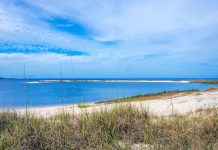
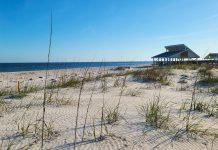
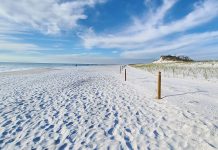
The sand along this corridor runs wide and flat almost everywhere you’ll walk it, and it packs down hard enough near the pier that you can ride a beach cruiser without sinking in. Up near the dunes it softens into a looser, warmer-toned layer, cocoa near the pier and paling out toward classic Florida white the further south you get into Crescent Beach, and either version works fine for sandcastles once you’ve worked a little water into it. There’s genuinely enough room here for a big group, a game of catch, or a long, uninterrupted walk without ever feeling boxed in.
The water changes with the wind more than the calendar. On a calm day it runs a deep, clear blue near the pier, and entry is gradual almost everywhere except right around the pier pilings themselves. This is a real surf coast, especially around A Street, so expect actual waves rather than a flat, lake-like swim, and rip currents are a genuine risk during and after a blow. Seasonal lifeguards cover the busiest stretches, but always check the flags before you wade in past your knees.
-
Walkability. Wide, flat, and hard-packed for most of the corridor, one of the easier long walks or bike rides in this whole guide.
-
Softness & Playability. Firmer near the pier, softer and paler toward Crescent Beach, with plenty of room for sandcastles, games, and a big group blanket.
-
Barefoot Comfort. Genuinely comfortable most of the way, with a bit more shell underfoot as you head toward Butler Beach. See my beach finds guide to this corridor for what actually turns up in that shell line.
-
Swimmability. Good near the lifeguarded main beach, with real surf and rip current risk around A Street and the pier. Check the flags before you go in.
Want the full geology, grain composition, and the complete sand and water condition ratings? I broke it all down separately in Sand & Shore: St. Augustine Beaches.
Dogs & Pet Accessibility at St. Augustine Beaches
Are Dogs Allowed on the Sand? YES.
You can bring your leashed dog to most of this corridor’s beaches without any trouble, from the pier north through Butler Beach and Crescent Beach. The one clear no is Anastasia State Park just up the road, which keeps dogs off its beach entirely.
Where Dogs Are Allowed
- ✓St. Augustine Beach’s main stretch near the pier, on a leash, though summer afternoons get busy enough that early morning is easier on both of you.
- ✓The A Street surf corridor, where dog walkers and surfers share the sand without much friction.
- ✓Butler Beach, genuinely one of the calmest, most comfortable dog walks in this whole corridor.
- ✓Crescent Beach, wide with easy parking, a favorite for a longer walk together.
Where Dogs Are NOT Allowed
- ✗Anastasia State Park’s beach, just north of the pier, bans dogs entirely to protect nesting shorebirds.
- ✗Inside the Castillo de San Marcos itself, though a leashed dog can join you on the green outside and around most of the fort’s exterior grounds.
Paws on the Ground Reality
The hard-packed sand near the pier stays comfortable for paws most of the year, and the water’s right there for a quick cool-down between walks. Bring your own water anyway, since fountains are sparse right on the beach. Enforcement is genuinely relaxed at Butler and Crescent Beach, where you’ll mostly see regulars who already know the rules, and a bit more visible near the pier and boardwalk during busy summer weekends.
If you want a longer walk together away from the sand, downtown St. Augustine’s brick sidewalks and St. George Street are genuinely walkable with a leashed dog, and it’s a nice way to pair a beach morning with an afternoon exploring the historic district.
Crowd Levels and the Overall Feel of St. Augustine Beaches
The crowd concentrates hardest around the pier, especially on summer weekends, when the splash park and beachfront restaurants pull in both beach visitors and day-trippers from the historic district. Drop south past Butler Beach and the crowd thins fast, and by the time you reach Crescent Beach you’re mostly among locals and repeat visitors who specifically sought out the quieter stretch.
The overall feel here shifts by season in a pattern shaped as much by the historic district’s tourism calendar as by the beach itself:
- Spring: comfortable crowds, good surf, and the best weather window before summer humidity sets in
- Summer: peak season for the beach itself, busiest at the pier, with downtown St. Augustine running just as busy in parallel
- Fall: my favorite season here, the most consistent surf of the year, warm water lingering, and noticeably thinner beach crowds even as downtown stays active
- Winter: the beach turns quiet and often windy, while downtown transforms for Nights of Lights, one of the most-visited holiday displays in the Southeast
Who Is St. Augustine Beaches Really For?
✓ Who Will Love St. Augustine Beaches
-
History lovers who want a beach trip paired with genuine Spanish colonial history, a working 19th-century lighthouse, and one of the most significant Civil Rights Movement sites on Florida’s coast
-
Families who want splash park amenities, easy parking, and a walkable strip of restaurants without giving up a genuine beach day
-
Surfers looking for one of the more established, welcoming surf communities on Florida’s northeast coast
-
Anyone who wants two genuinely different trips in one, a lively beach day and a full day exploring one of the oldest cities in the country
-
Cyclists and long walkers who want hard-packed sand that makes covering distance easy and comfortable
-
Visitors who want a quieter old Florida alternative within the same trip, since Butler Beach and Crescent Beach sit just a short drive south
✗ Consider Another Beach If…
-
You want the softest, palest sand possible. Head to Anastasia State Park or Ponte Vedra Beach instead
-
You’re a dedicated sheller chasing a high hit rate. Vilano Beach and Ponte Vedra Beach both outperform this corridor for that specific hobby
-
You want total solitude on a summer weekend. The main beach near the pier gets genuinely busy, though Crescent Beach solves this within a short drive
-
You’re looking for a purely natural, undeveloped beach experience. This corridor is more developed than Anastasia State Park or the GTM Reserve
-
You want to avoid downtown crowds entirely. St. Augustine’s historic district draws heavy tourist traffic year-round, and it bleeds over into beach weekends
Things to Do at St. Augustine Beaches, Florida
Between the beach corridor and everything across the bridge, this region gives you more to fill a trip with than almost anywhere else in this guide.
-
Surfing. A genuinely established local surf scene around A Street and the pier, with Surf Station and Pit Surf Shop both offering rentals, lessons, and local knowledge.
-
Swimming. Best near the main beach access points with seasonal lifeguard coverage. Keep a healthy distance from the pier structure itself.
-
Beach Biking. The hard-packed sand near the pier and through Crescent Beach is genuinely excellent for beach cruisers with thick tires.
-
Pier Fishing. The St. Johns County Ocean Pier is a longstanding local fishing spot, with a small sightseeing and fishing fee, when the pier structure itself is open.
-
Climbing the St. Augustine Lighthouse. 219 steps to the top of a 165-foot working lighthouse, with views across the historic district, the beach corridor, and the Atlantic all at once.
-
Touring Castillo de San Marcos. A nearly 350-year-old Spanish fort built from local coquina, with cannon firings and living history demonstrations most weekends.
-
Visiting Butler Beach’s Historical Markers. A quiet, essential stop for understanding this coast’s role in the Civil Rights Movement, with periodic guided history walks offered through the county.
-
Wildlife Watching. Gopher tortoises are a reliable sight in the dunes at Butler and Crescent Beach, and sea turtle nesting runs May through October along the full corridor.
-
Walking St. George Street. A pedestrian-only historic street downtown lined with centuries-old buildings, shops, and small museums.
-
King Street Nightlife. Downtown’s liveliest evening strip, with bars, live music, and a genuinely good pub scene within walking distance of the historic district.
-
Nights of Lights. A downtown holiday tradition from mid-November through late January, one of the more spectacular light displays in the Southeast.
Local Knowledge and Practical Advice
A few things I’ve picked up walking this corridor more times than I can count:
-
Understand the geography before you arrive. Downtown St. Augustine sits on Matanzas Bay, not the ocean. The actual beaches are a short drive east on Anastasia Island, in the separate town of St. Augustine Beach.
-
Check the pier’s construction status before planning around it. As of mid-2026, the fishing pier itself is closed for piling repairs into November, though the beach and splash park remain open.
-
A Street offers genuine drive-on beach access. Bring a 4WD vehicle if you want to park right at the waterline near the surf break.
-
Give yourself real time at Butler Beach. This isn’t a quick photo stop. Read the markers, sit with the history, and don’t rush it.
-
Climb the lighthouse late in the day. The light and the view both improve as the afternoon goes on, and it’s a genuinely different experience than a midday visit.
-
Bring a card, not cash, for the fort. Castillo de San Marcos does not accept cash at the entrance booth.
-
Leashed dogs are welcome at most beaches along this corridor. Clean up after them, and remember Anastasia State Park just north does not allow dogs on its beach at all.
-
Respect sea turtle nesting season, May through October. Avoid flashlights on the beach at night, and don’t leave chairs or equipment out overnight.
-
Visit the Wednesday farmers market at the pier. Running from 8am to noon, it’s a genuinely good way to feel the local rhythm of this beach town beyond the tourist strip.
-
Give the beach corridor and downtown separate days. Trying to do both in one afternoon means shortchanging whichever one you visit second.
Where to Stay Near St. Augustine Beaches, Florida
This region offers more lodging variety than almost anywhere else in this guide, since you’re choosing between a beach town and a historic city within a few miles of each other.
Beachfront Hotels & Condos Near the Pier
Oceanfront hotels and vacation condos cluster along A1A Beach Blvd near the pier, putting you within walking distance of the splash park, restaurants, and the beach itself.
Historic Downtown Inns
Downtown St. Augustine has some of the best historic bed and breakfast inns in Florida, housed in centuries-old buildings a short walk from the fort and St. George Street. Expect a short drive to reach the actual beach from here.
Crescent Beach & Butler Beach Rentals
Vacation homes and condos in Crescent Beach and the surrounding area offer a quieter, more residential base, with easy access to the same beach corridor and a shorter drive back to downtown than you might expect.
Camping
Anastasia State Park, just north across the inlet, is the closest and best camping option, with 139 sites in a maritime hammock a short walk from its own four miles of beach.
Budget Options Inland
For lower rates, chain hotels along US-1 and SR 16 west of the historic district offer a wider range of budget options, with a short drive to both downtown and the beach corridor.
What Makes St. Augustine Beaches Different from Nearby Beaches
St. Augustine Beaches stands apart because it’s never really just a beach trip. Every other beach in this guide asks you to focus on the sand and water. This one asks you to hold a beach day, a surf culture, a Spanish fort, a working lighthouse, and one of the most consequential stretches of Civil Rights history in Florida all in the same visit.
A few features make it distinct:
History you can’t separate from the sand
Butler Beach’s role in the Civil Rights Movement and the Castillo de San Marcos’s coquina walls both tie this coastline directly to American history in a way no other beach in this guide can claim.
A genuine surf town identity
The community around A Street gives this beach a real, established surf culture, distinct from the more resort-driven identity of beaches like Ponte Vedra further north.
Two destinations sharing one trip
Very few beach towns in Florida sit this close to a genuinely world-class historic district. St. Augustine Beach and downtown St. Augustine function as two separate, equally worthwhile trips within the same visit.
A corridor that changes character every few miles
From the busy pier through Butler Beach’s quiet weight to Crescent Beach’s old Florida calm, this stretch of coast offers more range in a short drive than almost anywhere else on Florida’s Atlantic coast.
St. Augustine Beaches vs. Other Northeast Florida Beaches
These are the beaches visitors most often weigh against this corridor, and the honest read on when you’d choose one over the other.
St. Augustine Beaches vs. Anastasia State Park
Anastasia, just across the inlet, offers softer sand, real wilderness, and a genuine entrance fee and dog restriction. St. Augustine Beach gives you more amenities, more nightlife, and easier day-to-day access.
St. Augustine Beaches vs. Vilano Beach
Vilano trades this corridor’s amenities and history for a rougher, more coquina-heavy beach and an Old Florida Art Deco character all its own. Both share strong surf culture, but St. Augustine Beach offers considerably more to do beyond the sand.
St. Augustine Beaches vs. Ponte Vedra Beach
Ponte Vedra trades public access and amenities for exclusivity and golf culture. St. Augustine Beach is the far more open, walkable, and historically rich alternative, with none of Ponte Vedra’s parking restrictions.
St. Augustine Beaches vs. Daytona Beach
Daytona, further south, offers a bigger, louder, more built-up beach town experience, with beach driving as its own attraction. St. Augustine Beach is smaller, quieter, and paired with a far more significant historic district.
Bottom line: St. Augustine Beaches is the choice when you want a genuine beach vacation and a genuine historic city trip without choosing between them. Anastasia and Vilano give you more nature and grit. Ponte Vedra gives you more exclusivity. Daytona gives you more scale. This corridor gives you the most complete, historically layered beach trip in this entire guide.
St. Augustine Beaches, Florida: Frequently Asked Questions
Is downtown St. Augustine on the beach?
No. The historic district sits on Matanzas Bay. The actual beaches are a short drive east on Anastasia Island, in the separate town of St. Augustine Beach and the communities of Butler Beach and Crescent Beach further south.
Is the St. Johns County Ocean Pier open?
As of mid-2026, the pier structure itself is closed for piling repairs expected to run into November, meaning no fishing or sightseeing on the pier. The surrounding beach, splash park, and other amenities remain open.
What is Butler Beach known for?
Butler Beach was established in 1927 by Frank B. Butler as the only beach open to Black Floridians between Jacksonville and Daytona Beach during segregation. It played a significant role in the 1964 Civil Rights Movement, including a stay by Martin Luther King Jr. at Butler’s beach hotel.
Are dogs allowed on St. Augustine Beach?
Yes, leashed dogs are welcome at most beaches along this corridor, including St. Augustine Beach, Butler Beach, and Crescent Beach. Anastasia State Park just north does not allow dogs on its beach.
Can you drive on St. Augustine Beach?
Yes, at designated ramps including A Street, with a seasonal beach driving pass required from March through September. Driving is not permitted at Anastasia State Park just north.
Is St. Augustine Beach good for surfing?
Yes, it has one of the more established surf communities on Florida’s northeast coast, centered around A Street and the pier, with consistent breaks and local surf shops.
How far is the St. Augustine Lighthouse from the beach?
It sits on Anastasia Island just across the Bridge of Lions from downtown, a short drive or walk from the main beach access points near the pier.
Is Castillo de San Marcos worth visiting?
Yes. It’s the oldest masonry fort in the continental United States, built from local coquina between 1672 and 1695, and it ties directly into the region’s Spanish colonial and Civil Rights history.
Is St. Augustine Beach crowded?
The main beach near the pier gets genuinely busy in summer, especially on weekends. Butler Beach and Crescent Beach further south stay noticeably quieter year-round.
What is the best time of year to visit St. Augustine Beaches?
Fall offers the best combination of warm water, consistent surf, and thinner crowds. Spring is a close second. Winter is quiet at the beach but brings downtown’s Nights of Lights celebration.
Is St. Augustine Beach good for families?
Yes, especially near the pier, with a splash park, seasonal lifeguards, and a walkable strip of family-friendly restaurants and shops.
What is Crescent Beach known for?
A quieter, old Florida stretch of coast south of Butler Beach, known for wide, easy-parking beaches, hard-packed sand good for biking, and a small, longstanding local restaurant scene.
Patti’s Perspective: My Honest Take on St. Augustine Beaches
The lighthouse gave me the opposite kind of moment, lighter, but no less memorable. I climbed those 219 steps on a clear late afternoon, and reaching the top and seeing the whole shape of this coast, the fort, the bay, the barrier island, the ocean beyond it, laid out at once, was the first time this whole region actually clicked into place for me geographically. I’ve recommended that climb to more readers than almost anything else in this guide, and nobody has ever told me it wasn’t worth it.
What I keep coming back to about this corridor is how much range it holds in such a short stretch of coast. You can have a loud, splash-park family afternoon at the pier and a quiet, weighty hour at Butler Beach on the very same day, and both experiences feel completely genuine to what this place actually is. Very few beaches in Florida ask that much of a single visit, and even fewer deliver on it.
My honest caveat, don’t rush this region. Give the beach corridor its own day, give downtown its own day, and give Butler Beach more time than a quick drive-by. Do that, and this becomes one of the richest, most complete trips in this entire guide.
Want to Live by the Water?St. Augustine Beach and the surrounding Anastasia Island communities offer a genuine mix of coastal real estate, from beachfront condos near the pier to quieter, more residential properties in Butler Beach and Crescent Beach further south.The market here draws history lovers, retirees, and remote professionals who want a walkable beach town within easy reach of one of the most historically significant small cities in the country. Because so much of this coastline blends beach access with proximity to downtown St. Augustine, demand tends to stay steady across both beach-focused and history-focused buyers.If living near this kind of layered coastline, beach on one side, centuries of American history on the other, is something you’re considering, it’s worth exploring what’s available in this area.Explore Waterfront Living at LiveByTheWater.com
Real estate referral partner