




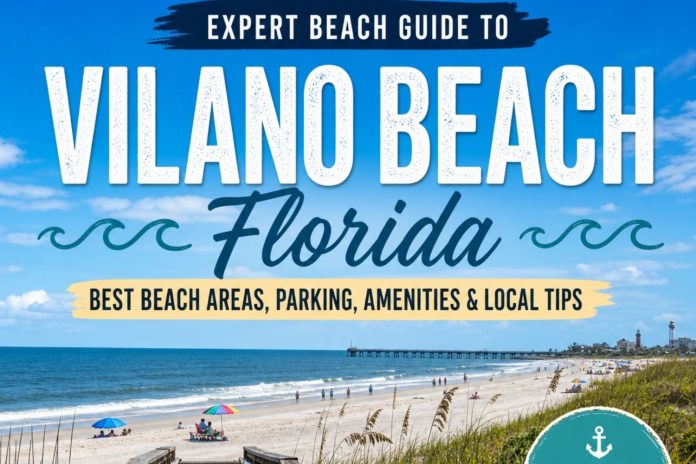
Vilano Beach, Florida
Vilano Beach is the beach I send people to when they tell me they loved St. Augustine’s history but wished the beach itself felt like it had some. This is a small, unpolished barrier island town two miles north of the historic district, sitting right where the Atlantic pours into the St. Augustine Inlet, and it has never bothered dressing itself up for visitors. The sand is rougher here. The current is stronger. And there’s a pedestrian bridge over A1A covered in padlocks that tells you more about this place than any brochure could.
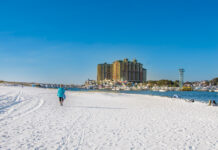
Vilano Beach sits on a narrow stretch of barrier island between the Atlantic and the Tolomato River, just south of the Guana Tolomato Matanzas Reserve and just across the inlet from Anastasia Island and downtown St. Augustine. The town itself grew up around a grand 1920s casino that the ocean eventually reclaimed, and what’s left is a scattering of Art Deco motels, a working fishing pier, and a beach that locals have quietly preferred over the bigger, softer beaches to the south for decades.
In this guide I’m walking you through every real access point along this island, going deep on the coquina sand here and why it behaves so differently from the beach at Ponte Vedra just north of it, scoring it honestly across every category that matters, telling you exactly who this beach fits and who should keep driving south to softer sand, and covering where you can bring your dog. I’ll cover the love-lock bridge, the main pavilion beach, the inlet at Porpoise Point, and the quieter Surfside access north of town. I close with my honest take on why I keep coming back to a beach that makes you work harder than the one next door.
The Vibe & Culture at Vilano Beach
An Old Florida Beach Town That Never Got Polished
Vilano Beach looks like it stopped trying to impress anyone sometime around 1955 and simply kept going. That’s the whole appeal.
Cross the Francis and Mary Usina Bridge from St. Augustine and the character shifts fast. Vilano Road, the town’s main street, is lined with faded pastel Art Deco motels, a Publix, a handful of seafood restaurants with water views, and tiled fountains that hint at a much grander past. In 1926, developer August Heckscher built the Grande Vilano Casino here, a Mediterranean Revival building with a saltwater pool the length of half a football field, big bands, and vaudeville acts pulling in visitors from Henry Flagler’s hotels across the water. A string of hurricanes in the late 1930s tore it apart piece by piece, and the town rebuilt itself smaller and quieter, which is the version that survives today.
What you feel walking around Vilano now is a beach town scaled for people, not cars. It’s genuinely bike-friendly, the restaurants sit close enough to the sand that you can walk from a swim to dinner in flip-flops, and the retro motel signs and the restored Bluebird of Happiness statue at the pier give it a character that St. Augustine Beach, a few miles south, doesn’t try to match. I’ve stayed in both towns for this work, and Vilano is the one that feels lived-in rather than built for tourism.
The beach itself carries that same unpolished honesty. There’s no lifeguard tower here, the sand is rougher and shellier than the soft white beaches further south, and the current near the inlet runs strong enough that this is genuinely a surf and skimboard beach more than a float-on-your-back beach. Every August, the Florida Skimboarding Pro/Am Tournament brings competitors from across the country to compete right off the pier. On the third Saturday of most months, the Vilano Beach Artisan Market fills Vilano Road with local vendors, a musician, and a cash bar, and it’s a genuinely good way to feel the town’s actual rhythm rather than just its beach.
Vilano Beach Areas: Four Access Points, One Very Different Inlet
Vilano Beach is short enough that you can walk the whole thing in an afternoon, but each access point along it has its own character, and the inlet at the southern tip changes everything about the water once you reach it. Here’s how it breaks down, north to south.
North Beach Park & The Love Bridge
Free Parking · The Pedestrian Bridge Over A1A
This is the access point just north of Vilano’s town center, and it’s the one most people photograph before they ever get their feet wet. A pedestrian bridge carries you over A1A from the parking lot to the dune walkover, and somewhere along the way this ordinary piece of infrastructure turned into what locals call the love bridge, its railings hung with padlocks that couples add as a small, physical promise to each other. St. Johns County has removed the locks more than once over the years for maintenance, and each time, people quietly start hanging new ones. I find that more moving than almost any official landmark on this coast. It says something honest about why people come back to a specific stretch of sand for the rest of their lives.
Past the bridge, the beach itself is wide and family-oriented by Vilano standards, with a playground, picnic pavilion, and grills making this the easiest access point for a full day rather than a quick walk. The crowd here runs local and repeat, families who’ve been coming for years rather than first-time visitors working down a list.
My honest take, come here specifically for the bridge and stay for the beach, not the other way around. Bring your own lock if that’s your kind of thing. I’ve seen grown men tear up walking back across it.
Vilano Beach Pavilion & Main Beach
2725 Anahma Drive · The Town’s Front Door
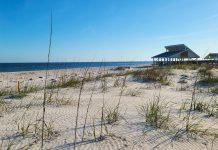
This is the central, most-used access point in Vilano Beach, sitting directly behind the town’s main pavilion with two dune walkovers, restrooms, and showers. From the walkover, you get one of the better views on this whole stretch of coast, the open Atlantic straight ahead and, if you look south along the shoreline, the rooflines of downtown St. Augustine across the inlet. At low tide, the jetties just south of the pavilion create small tide pools worth poking through with kids.
The crowd here is the most mixed of any access point in Vilano, day-trippers up from St. Augustine, surf fishermen working the jetty line at dawn, and a steady rotation of dog walkers, since this stretch welcomes leashed dogs without restriction. It’s busier than North Beach Park on a summer weekend but nothing close to St. Augustine Beach’s crowd a few miles south.
I park here most often simply because it’s the fastest way onto the sand, and the walk south toward the jetties is one of my favorite short stretches on this whole coast. Watch your footing near the rocks. The shell content underfoot gets serious fast.
Porpoise Point
The Inlet · 4WD Beach Access, Leashed Dogs Welcome
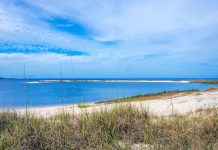
At the southern tip of the island, where the St. Augustine Inlet cuts between Vilano Beach and Anastasia Island, the whole character of the water changes. I think of this stretch as Vilano Point, since that’s really what it is, the point of the island, even though the official name on the map is Porpoise Point. A jetty and a natural sand bar work together here to break up the incoming surf, creating a calm, protected tidal pool that swims nothing like the open beach a mile north. This is a 4WD beach driving access point, with a seasonal fee, and it’s a genuine local favorite for fishing, launching jet skis, and simply parking a truck at the waterline for the day.
The neighborhood behind this stretch, also called Porpoise Point, doesn’t allow vacation rentals, so the crowd on the sand here leans toward residents, regular visitors, and boaters working the inlet rather than tourists. It’s quieter in the way a place stays quiet when the people who show up already know exactly why they’re there.
My honest take, this is worth the drive to the very end of the island. I’ve had some of my best sunset walks in this entire region right here, since the point faces both the open Atlantic and back across the water toward St. Augustine, and you genuinely get a choice of which direction to watch the light fall.
Surfside Beach Access
3070 Coastal Highway · Limited Facilities, Genuine Quiet
North of the town center, Surfside is the access point most visitors skip entirely, and that’s exactly why I keep it on my list. Facilities here are minimal, a parking pull-off and a walkover, but there’s also a 4WD vehicle access ramp and equestrian trailer parking, since this stretch permits horseback riding on the sand.
The crowd here is thin even in season, mostly locals who’d rather skip the pavilion crowd, the occasional angler, and riders bringing horses down for a morning walk on the beach. It has none of the amenities of the other access points, and that’s the whole draw.
If you’ve already done the pavilion and the point and want one more stretch of sand with nobody on it, this is where I’d send you. Don’t expect a bathroom. Do expect to have the beach mostly to yourself.
Vilano Beach Rankings: Expert Scores Across 11 Categories
These scores weigh Vilano Beach as the working, unpolished beach town it actually is, not against the soft white sand beaches a few miles south that are playing a different game entirely.
Sand Quality
6/10
Rough, shell-heavy coquina sand in shades of orange and purple, genuinely beautiful to look at but harder underfoot than the soft sand beaches to the south. Bring shoes if you’re staying a while.
Hiking & Beach Walking
7/10
A genuinely rewarding walk from the pavilion south toward Porpoise Point, with the St. Augustine skyline as your backdrop the whole way. Shelly patches slow you down in spots.
Shark Teeth & Shelling
8/10
One of the more dependable shark tooth beaches on this coast, small but plentiful, and guided shark tooth tours actually launch from Vilano Beach itself.
Water Conditions
5/10
A steep drop-off and real rip current risk near the inlet make this a swim-with-caution beach. Porpoise Point’s jetty-protected pool is the exception, and a genuinely good one.
Scenery & Natural Beauty
7/10
Open dunes, an active inlet, and a view across the water to downtown St. Augustine that few Florida beaches can offer. Low-rise homes and small motels keep the skyline modest.
Birding & Wildlife
6/10
Dolphins are a regular sight off the pier, and the marsh boardwalk near the bridge draws its own share of shorebirds, though the real wildlife destination on this stretch is the GTM Reserve just north.
Family Friendliness
5/10
Workable at North Beach Park and the jetty tide pools, but the steep drop-off and lack of lifeguards elsewhere mean this isn’t the beach I’d choose for young kids and open water together.
Dog Friendliness
8/10
Leashed dogs are welcome at every access point, including the drive-on stretch at Porpoise Point, and there’s a separate dog park a short walk inland from North Beach Park.
Solitude & Peace
6/10
Quieter than St. Augustine Beach year-round, and genuinely empty at Surfside, but the pavilion and pier area carry real local foot traffic on nice weekends.
Entertainment & Nightlife
6/10
No boardwalk scene, but a genuine small-town character. Waterfront seafood restaurants, a monthly artisan market, and the August skimboarding tournament give this place real personality.
Parking & Beach Access
7/10
Four separate access points spread across a short island, most with free or low-cost lots. Genuinely easier than Ponte Vedra just north, though nothing here is a giant paved lot.
Vilano Beach Sand & Water
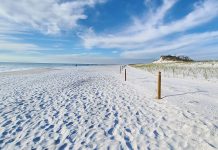
The sand at Vilano Beach doesn’t behave like the sand on a Florida postcard, and that’s part of its charm. Instead of fine, powdery grain, you’re walking on a genuinely coarse, shell-heavy mix, tinted with streaks of orange and purple that make it prettier up close than most Florida beaches. It’s uneven underfoot, smoother in some stretches than others depending on the tide, and it’s rougher on bare feet than the soft sand you’d find at St. Augustine Beach a few miles south. Sandcastle building works fine near the pavilion once the sand’s had water worked into it, but this isn’t a beach built for lounging barefoot all afternoon.
The water here changes character completely depending on where you stand. Out on the open beach, proximity to the St. Augustine Inlet creates a steeper drop-off and a real longshore current, which is exactly why surfers and skimboarders favor this stretch. Down at Porpoise Point, a jetty and sand bar block most of that energy, creating a calm pocket that swims like an entirely different beach. There are no staffed lifeguard towers anywhere in Vilano, so know which stretch you’re on before you decide how far to wade in.
-
Walkability. Uneven and shell-heavy in patches, still walkable but genuinely rougher than a soft quartz beach further south.
-
Softness & Playability. Coarse and colorful rather than soft, though the sand near the pavilion works fine for sandcastles once it’s had some water worked into it.
-
Barefoot Comfort. The honest weak point here. Bring water shoes, since the same shell content that makes the shelling so good is rough on bare feet.
-
Swimmability. Rougher on the open beach with real current near the inlet, calmer and more forgiving at Porpoise Point. No lifeguards anywhere, so self-monitor.
Want the full geology, grain composition, and the complete sand and water condition ratings? I broke it all down separately in Sand & Shore: Vilano Beach.
Dogs & Pet Accessibility at Vilano Beach
Are Dogs Allowed on the Sand? YES.
Vilano Beach is genuinely one of the most dog-friendly stops in this whole guide. Every access point along the beach welcomes leashed dogs without restriction, and a dedicated off-leash dog park sits a short walk inland from North Beach Park for whenever your dog needs to run free.
Where Dogs Are Allowed
- ✓North Beach Park, including the walk across the love bridge, welcomes leashed dogs any time.
- ✓Vilano Beach Pavilion and the main beach, jetties included, allow leashed dogs without restriction.
- ✓Porpoise Point’s drive-on stretch at the inlet is leashed-dog friendly, even with vehicles parked on the sand.
- ✓Surfside Beach Access, the quietest of the four, welcomes leashed dogs too.
Where Dogs Are NOT Allowed
- ✗Off-leash anywhere on the beach or in the water, at any of the four access points, including Porpoise Point.
- ✗Inside restaurants, shops, and other private businesses along Vilano Road, unless a specific spot posts its own pet-friendly policy.
Paws on the Ground Reality
Bring your own water for your dog, since none of the four beach access points has a pet fountain, and think about a rinse-off plan for paws afterward. The same coarse coquina shell that makes this beach rough on bare human feet is just as tough on paws, so booties or a quick rinse genuinely help if your dog spends a lot of time here. Enforcement feels genuinely relaxed rather than strict. Most of what you’ll see is regulars who already know the rules and follow them without being asked.
If your dog wants more ground to cover than a beach walk gives it, the dedicated dog park a short walk inland from North Beach Park lets it run fully off leash, and the Guana Tolomato Matanzas Reserve just north adds miles of shaded trail for a longer walk together.
Crowd Levels and the Overall Feel of Vilano Beach
The crowd at Vilano Beach concentrates around the pavilion and the pier, and thins out fast at both ends of the island. North Beach Park draws families and repeat visitors who come specifically for the love bridge. Porpoise Point draws anglers, boaters, and residents. Surfside stays close to empty year-round. Nobody comes to Vilano Beach by accident the way they might wander onto St. Augustine Beach from downtown, which keeps the overall crowd smaller and more intentional.
The feel of this beach shifts with the seasons in a fairly typical Northeast Florida pattern:
- Spring: mild crowds, comfortable water temperatures, and the best window for calm shark tooth hunting before summer swell picks up
- Summer: the busiest stretch, especially around the pavilion and the August skimboarding tournament, though still modest compared to the bigger beaches south of the inlet
- Fall: my favorite season here, warm water lingering, thinner crowds, and the best surf of the year as northeast swells start rolling in
- Winter: quiet and a little wild, with strong wind and swell days that keep casual swimmers away but reward anyone who just wants a bracing walk
Who Is Vilano Beach Really For?
✓ Who Will Love Vilano Beach
-
Shell collectors and shark tooth hunters who want a beach where the hunting is genuinely part of the appeal, not an afterthought
-
Surfers and skimboarders looking for real, consistent wave energy this close to St. Augustine
-
Anyone who wants Old Florida character, Art Deco motels, and a beach town that feels lived-in rather than developed for tourism
-
Dog owners, since every access point here welcomes leashed dogs without restriction
-
Anglers who want jetty and inlet fishing within walking distance of good seafood
-
Couples who want a small, meaningful ritual to build into their trip, whether or not a padlock is involved
✗ Consider Another Beach If…
-
You want soft, powdery white sand to lay out on. Head to St. Augustine Beach or Butler Beach instead
-
You’re bringing small children into open water. The steep drop-off and lack of lifeguards make this a beach that needs real caution
-
You want a boardwalk with shops and a pier full of amusements. Vilano’s pier is functional, not a tourist attraction
-
You have sensitive feet and don’t want to deal with shell content. This is a shoes-on beach for most people, most of the year
-
You need a large paved lot with hundreds of spots. Vilano’s parking is real but modest at every access point
Things to Do at Vilano Beach, Florida
Vilano Beach rewards people who came to do something specific with their hands and feet, not just lay on a towel. Here’s what actually fills a day here.
-
Shark Tooth Hunting. Scan the wrack line at low tide for small, dark triangular teeth. Guided shark tooth tours actually launch right from Vilano Beach if you want an expert eye alongside you. See my full beach finds guide to Vilano Beach for what else turns up in the wrack line.
-
Shelling. Orange and purple coquina fragments, whelks, and olives turn up steadily. This is where I get my squat workout in. Every good shell means another squat, and a real shelling walk here works your legs harder than most gym routines.
-
Surfing & Skimboarding. Genuinely good, best on an incoming tide near the inlet. The Florida Skimboarding Pro/Am Tournament runs every August right off the pier.
-
Fishing. Jetty and inlet fishing at Porpoise Point and along the pavilion’s jetties, plus the Vilano Beach Fishing Pier over the Tolomato River side.
-
Jet Skiing & Boating. Porpoise Point is the local launch point for jet skis, with easy access to the inlet and the Intracoastal Waterway beyond it.
-
Walking the Nature Boardwalk. A quarter-mile boardwalk near the bridge runs through the salt marsh with wildlife mosaics along the way, connecting the residential side of the island to the town center.
-
Horseback Riding on the Beach. Permitted at the Surfside access point, which includes equestrian trailer parking specifically for this.
-
Dolphin Watching. A regular sight off the pier and near the inlet, especially in calmer morning conditions.
-
The Vilano Beach Artisan Market. Local vendors, art, and a musician fill Vilano Road on the third Saturday of most months, a genuinely good way to feel the town beyond the sand.
-
Sunrise and Sunset Watching. Porpoise Point is the rare spot on this coast where you get a real choice, sunrise over the open Atlantic or sunset back across the inlet toward St. Augustine.
Local Knowledge and Practical Advice
A few things I’ve picked up walking this beach more times than I can count:
-
Bring water shoes. The coquina shell content here is heavier than most Florida beaches, and I say this as someone who genuinely loves the shelling. Bare feet get uncomfortable fast in the wrong spots.
-
There are no lifeguards anywhere in Vilano Beach. Respect the current near the inlet especially, and if you want calmer water, drive to Porpoise Point instead of swimming the open beach.
-
Porpoise Point’s 4WD beach access requires a seasonal pass. The fee is charged March 1 through Labor Day and the beach is free to drive October through February.
-
Driving hours change by season. May through September, beach driving runs 8am to 7:30pm. October through April, it’s 9am to 5pm.
-
Dogs must stay leashed at every access point, including in the water. There’s also a separate dog park a short walk inland from North Beach Park if your dog needs to run off leash.
-
Bring your own lock if you want to add to the love bridge. St. Johns County has cleared it before for maintenance, so don’t be surprised if it looks different than photos you’ve seen online.
-
If you want a vacation rental, stay on the Vilano Beach side, not Porpoise Point. The Porpoise Point neighborhood doesn’t allow short-term rentals, while Vilano Beach proper has no such restriction.
-
Check the tide before you go, not just the weather. Low tide opens up the tide pools near the pavilion jetties and exposes the best shark tooth hunting along the whole beach.
-
Bike if you can. Vilano Road and the residential streets are genuinely bike-friendly, and it’s the easiest way to hit multiple access points in one visit without hunting for parking each time.
-
Pair a beach morning with the Guana Tolomato Matanzas Reserve just north. It’s a short drive and adds a genuine nature day to a trip that’s otherwise centered on the sand.
Where to Stay Near Vilano Beach, Florida
Vilano Beach skews toward small, character-driven lodging rather than big resorts, and the options break down clearly by what kind of trip you’re planning.
Art Deco Motels & Boutique Hotels
Retro motels along Vilano Road, along with a Hyatt Place, Holiday Inn Express, and Hampton Inn near the town center, put you within walking distance of the pavilion beach and the restaurants. This is the easiest, most walkable option if you don’t want to drive to the sand.
Vacation Rentals in Vilano Beach Proper
Vilano Beach has no HOA restrictions on short-term rentals, which has made it a genuine second-home and vacation-rental market, with homes ranging roughly from the $400,000s to $3 million or more for oceanfront.
Porpoise Point Homes
This neighborhood at the inlet is residential-only, with no vacation rentals permitted. It’s worth knowing about even if you’re not buying, since it explains why the crowd at Porpoise Point feels so different from the rest of the beach.
Camping
Anastasia State Park, just across the inlet and a short drive south through downtown St. Augustine, is the closest option, with beachfront tent and RV sites and considerably less of a drive than from most other St. Johns County beaches.
Downtown St. Augustine, Nearby
For more lodging variety and a wider range of budgets, downtown St. Augustine sits about two miles south, with historic inns, chain hotels, and easy access back to Vilano Beach across the bridge.
What Makes Vilano Beach Different from Nearby Beaches
Vilano Beach stands apart because it never smoothed itself out, literally or otherwise. Most Northeast Florida beach towns lean into soft sand and easy swimming. This one leans into character, current, and a coastline shaped by an active inlet.
A few features make it distinct:
A working inlet, not just a view of one
The St. Augustine Inlet doesn’t just sit at the edge of Vilano Beach, it actively shapes the sand, the current, and the fishing here in a way that beaches further from an inlet mouth simply don’t experience.
The love bridge
Very few beach access points in Florida carry a genuine, self-renewing local tradition the way this pedestrian bridge does. It’s a small thing that says a lot about why people keep coming back.
Old Florida that survived instead of getting redeveloped
The Art Deco motels and the retro character here are original, not a themed re-creation. Very few Northeast Florida beach towns kept this much of their mid-century identity intact.
Real surf close to a historic city
Vilano Beach’s steep drop-off and consistent wave energy make it a genuine surf and skimboard destination within a two-mile drive of America’s oldest city, which is a rare pairing on this coast.
Vilano Beach vs. Other St. Augustine Area Beaches
These are the beaches visitors most often weigh against Vilano Beach, and the honest read on when you’d choose one over the other.
Vilano Beach vs. Ponte Vedra Beach
Ponte Vedra Beach just north shares the same coquina sand heritage but wraps it in far more restricted, private access and a golf-resort identity. Vilano Beach gives you easier parking, a more casual crowd, and a beach town you can actually walk around.
Vilano Beach vs. St. Augustine Beach
St. Augustine Beach, just across the inlet, offers softer sand, a real pier with amenities, and considerably calmer swimming. Choose St. Augustine Beach for a classic family beach day. Choose Vilano Beach for character, shark teeth, and better surf.
Vilano Beach vs. Anastasia State Park
Anastasia State Park protects four miles of genuinely wild, undeveloped dune and beach just across the inlet, with none of the town character or the shell-heavy sand that defines Vilano. It’s the better choice for a quieter, more natural walk.
Vilano Beach vs. Butler Beach & Crescent Beach
Both sit further south with softer, whiter sand and a quieter, more residential feel. If Vilano’s coquina sand and current feel like too much texture for your trip, these are the gentler alternative a short drive away.
Bottom line: Vilano Beach is the choice for character over comfort. Ponte Vedra gives you the same sand heritage with less access. St. Augustine Beach, Butler Beach, and Crescent Beach all give you softer sand and calmer water. Vilano gives you an inlet, a love bridge, and a beach town that still feels like it belongs to the people who live there.
Vilano Beach, Florida: Frequently Asked Questions
Is Vilano Beach good for swimming?
It depends on where. The open beach has a steep drop-off and real rip current risk with no lifeguards on duty. The jetty-protected water at Porpoise Point swims far calmer and is the better choice for casual swimming.
Are dogs allowed at Vilano Beach?
Yes, leashed dogs are welcome at every access point, including the drive-on beach at Porpoise Point. There’s also a dedicated dog park a short walk inland from North Beach Park.
What is the “love bridge” at Vilano Beach?
It’s the pedestrian bridge over A1A connecting North Beach Park’s parking lot to the beach walkover, where visitors have attached padlocks as a symbolic gesture for years. St. Johns County has cleared the locks for maintenance more than once, and the tradition simply starts again.
Is Vilano Beach good for shark teeth?
Yes, it’s one of the more dependable spots on this stretch of coast. Scan the wrack line at low tide for small, dark triangular teeth, and guided shark tooth tours operate directly from Vilano Beach.
Can you drive on Vilano Beach?
Yes, at Porpoise Point and the Surfside access point, both requiring a seasonal beach driving pass and a four-wheel-drive vehicle. The pavilion beach and North Beach Park do not allow vehicles on the sand.
Is Vilano Beach crowded?
Generally no. It’s quieter than St. Augustine Beach year-round, with the pavilion and pier area carrying the most local foot traffic and Surfside staying close to empty most days.
Where is Porpoise Point?
At the southern tip of Vilano Beach, where the St. Augustine Inlet separates the island from Anastasia Island. A jetty and natural sand bar create a calm, protected swimming and fishing area there.
Is Vilano Beach good for surfing?
Yes. The steep drop-off and proximity to the inlet create consistent wave energy that makes this a genuine surf and skimboard destination, best on an incoming tide.
How far is Vilano Beach from downtown St. Augustine?
About two miles, across the Francis and Mary Usina Bridge. It’s an easy, scenic drive or bike ride between the two.
Is Vilano Beach family friendly?
It works for families who come prepared. North Beach Park and the pavilion’s tide pools are manageable, but the steep drop-off and lack of lifeguards elsewhere mean adults need to stay attentive in open water.
Patti’s Perspective: My Honest Take on Vilano Beach
Porpoise Point is the piece of this beach I didn’t expect to love as much as I do. Standing at the inlet with the current moving fast on one side and a calm, jetty-protected pool on the other, with downtown St. Augustine visible across the water, feels like standing at the hinge between two completely different versions of this coast. It’s one of my favorite quiet moments on this entire coastline, and almost nobody outside St. Johns County knows it’s there.
My honest caveat, don’t come to Vilano Beach expecting the easiest beach day on this coast. Come expecting a beach that makes you pay a little more attention, to your footing, to the current, to the tide chart, and rewards you for it with better shells, better surf, and a town that still feels like somebody’s actual home.
Want to Live by the Water?Vilano Beach offers a rare mix in Northeast Florida real estate, an authentic, walkable beach town with no HOA restrictions on short-term rentals, sitting just two miles from downtown St. Augustine and within easy reach of Ponte Vedra to the north.The market here draws second-home buyers, retirees, and investors alike, since a majority of properties were built in the 1950s and 60s and have since been remodeled, alongside a wave of new high-end construction. Homes range from around $400,000 inland to well over $3 million for direct oceanfront or Tolomato River properties with private docks.If living by the water, or renting it out part of the year, is something you’re considering, it’s worth exploring what’s available in this area.Explore Waterfront Living at LiveByTheWater.com
Real estate referral partner