
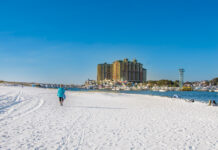

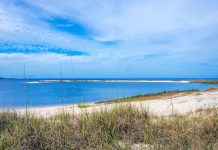
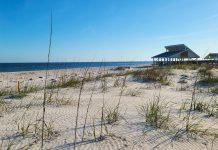
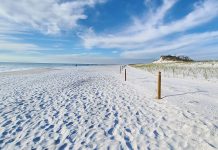


Guana Tolomato Matanzas Reserve, Florida
I’ve promised this guide to readers for a while now, since I kept mentioning this reserve in almost every guide I’ve written for Ponte Vedra Beach, Vilano Beach, and the beaches further south, and it finally deserves its own full treatment. The Guana Tolomato Matanzas National Estuarine Research Reserve is the single largest piece of protected coastline in this entire series, 76,000 acres stretching from Ponte Vedra Beach down past St. Augustine, and it’s the reason so much of this region has stayed as wild as it has.
This guide focuses on the reserve’s northern component, the section most people mean when they say the GTM Reserve, sitting on the Guana Peninsula between Ponte Vedra Beach and Vilano Beach. The reserve’s southern component technically includes Fort Matanzas National Monument, Washington Oaks Gardens State Park, and the River to Sea Preserve at Marineland, all of which I’ve already covered as their own dedicated guides, since each deserves that kind of depth. Here, I’m covering the part of the reserve most visitors actually mean when they ask about it, the Visitor Center, the trail network, the beach access points, and Guana Lake.
In this guide I’m covering the trail system and Visitor Center, the three undeveloped beach access points along A1A, and Guana Lake with its dam and boat ramps. I’ll go deep on what the sand and water are actually like at a beach with no development anywhere near it, score it honestly across every category that matters, tell you exactly who this reserve fits and who might want a beach with more amenities instead, and cover exactly how much room your dog gets here. I close with my honest take on why this is one of the places I recommend most, and least often get asked about.
The Vibe & Culture at the Guana Tolomato Matanzas Reserve
The Wild Buffer That Keeps This Whole Coast From Disappearing
Every beach guide I’ve written for this region eventually mentions this reserve, because almost none of the quiet that Ponte Vedra Beach and Vilano Beach still have would exist without it.
Created in 1999 and folded together with the former Guana River State Park in 2004, the GTM Reserve takes its name from the Guana, Tolomato, and Matanzas Rivers that thread through it, and it’s one of only 30 National Estuarine Research Reserves in the entire country, a partnership between NOAA, the state of Florida, and a small army of volunteers who maintain the trail system by hand. That volunteer effort matters more than it sounds like it should. Reserve staff focus almost entirely on research, and the genuinely well-marked, color-coded trail network you’ll hike here exists because the Friends of the GTM Reserve, with help from local Eagle Scouts, built and kept building it.
The human history here runs far deeper than the reserve’s 1999 founding. People have used this peninsula for roughly 5,000 years, and the reserve’s monthly guided cultural history hikes walk visitors past archaeological sites tied to that long occupation, from Indigenous use of the estuary’s resources through European plantation-era changes to the land. Near the North Beach access point, a statue of Ponce de León marks the site believed to be near where the Spanish explorer made landfall in 1513, and the whole peninsula carries that same layered weight, natural history and human history sitting directly on top of each other.
What you feel walking this reserve today is scale. The dunes here rank among the tallest in Florida, some reaching 35 to 40 feet, and the freshwater marsh, maritime hammock, and open estuary all sit within a short walk of each other. The Atlantic waters just offshore have served as a calving ground for the North Atlantic right whale for thousands of years, a species hunted nearly to extinction in the 1800s and still critically endangered today, and a full-scale model of one hangs from the ceiling of the reserve’s Visitor Center as a reminder of exactly what’s still out there, mostly unseen, just past the beach.
GTM Reserve Areas: Trails, Beach, and a Freshwater Lake
This reserve’s northern component breaks down into three distinct pieces, each worth its own time. Here’s how I approach it.
The Visitor Center & Trail Network
505 Guana River Road · 10 Miles of Color-Coded Trails
The reserve’s Environmental Education Center anchors the whole northern component, and it’s worth a stop even before you set foot on a trail. Inside, aquariums hold live and replica inhabitants of the local estuary, a laboratory and auditorium support the reserve’s research and education mission, and that full-scale right whale model overhead sets the tone for everything else you’ll see outside. The driveway to the Visitor Center sits before the parking fee station, so if the museum is your only goal, you can visit without paying to enter the trail and beach areas.
Behind the center, the trail system itself is genuinely one of the best-maintained networks I’ve hiked anywhere in Florida, color-coded arrows, posted maps at every junction, and benches marked to match their trail, all thanks to volunteer maintenance rather than paid staff. All trails branch from the Yellow Trail, a straight path connecting the trailhead to the Tolomato River, with the Purple and Orange loops branching off to cover a broad mix of maritime hammock, coastal scrub, and freshwater savanna along the way.
The crowd here is a genuine mix, hikers and trail runners working the full network, birders moving slowly with binoculars, and horseback riders, since this is one of the only trail systems in this entire guide where horses and leashed dogs are both welcome. My honest take, pick up a trail map at the trailhead pavilion west of the Guana Dam before you start, and don’t be afraid to combine loops. The junctions are genuinely intuitive enough to build your own route on the fly.
The Beach Access Points: North, Middle & South
Along A1A · Undeveloped Coquina Sand, No Lifeguards
Three separate parking lots along A1A give you access to the reserve’s Atlantic beach, each with its own boardwalk crossing the dunes to a wide, undeveloped stretch of coquina sand backed by protected dune scrub rather than oceanfront homes. The South Beach lot is the wheelchair-accessible option of the three. None of the three has a lifeguard on duty, and the beach itself stretches far enough in either direction that you can walk a genuinely long way without seeing another set of footprints.
The crowd at these access points is thinner than at nearby Mickler’s Landing or the Vilano Beach pavilion, mostly birders, dog walkers, and visitors who came specifically for the reserve rather than a typical beach day. On the third Saturday of most months, reserve volunteers lead a free “Beaches 101” walk starting with a short presentation at the Visitor Center before crossing the street to the sand.
My honest take, this is one of the most peaceful stretches of Atlantic coastline in this entire series of guides, precisely because it requires a small amount of extra effort, paying the parking fee, crossing the highway, walking the boardwalk, to actually reach it. That effort is exactly what keeps it this quiet.
Guana Lake & the Dam
Freshwater Fishing, Two Boat Ramps, and a Different Kind of Quiet
On the west side of A1A, Guana Lake, also known locally as Lake Ponte Vedra, is a freshwater impoundment created by the Guana Dam, with its own boat ramp limited to engines of 10 horsepower or less, which keeps the whole lake calm and quiet by design. A second ramp nearby provides access to the tidal Guana River itself, though mudflats there mean you may not be able to launch or return until the tide comes back in.
The crowd here skews toward anglers and paddlers who know this lake specifically, since the horsepower limit and freshwater setting make it a genuinely different experience from the open Atlantic a short walk east. Birders also work this side of the reserve heavily, since the freshwater marsh and open water draw species you won’t see on the beach side.
My honest take, if you brought a kayak or canoe and want calm water without driving all the way to a dedicated paddling outfitter, this is where I’d point you. Check the tide chart first if you’re planning to launch into the river side rather than the lake itself.
GTM Reserve Rankings: Expert Scores Across 11 Categories
These scores weigh the reserve as the wilderness-first destination it’s built to be, which means it wins overwhelmingly on nature and trails, and loses ground only where a developed beach town would naturally win.
Sand Quality
8/10
The same coquina-tinted sand found at neighboring Ponte Vedra and Vilano beaches, undeveloped and backed by protected dune scrub instead of oceanfront homes.
Hiking & Beach Walking
9/10
One of the best-maintained, most intuitively marked trail systems in this entire guide, with 10 miles to explore across wildly different habitats.
Shelling
7/10
Genuinely good beachcombing along an undeveloped stretch of coast that sees far less foot traffic than the beaches immediately to the north and south.
Water Conditions
6/10
Typical open Atlantic conditions with no lifeguard anywhere along the beach, balanced by genuinely calm freshwater paddling and fishing on Guana Lake.
Scenery & Natural Beauty
10/10
Some of the tallest dunes in Florida, freshwater savanna, maritime hammock, and open estuary within a short walk of each other. This is one of the most scenic reserves in this entire guide.
Birding & Wildlife
10/10
A flagship stop on the Great Florida Birding Trail, home to hundreds of documented bird species, dozens of mammal and reptile species, and offshore right whale calving grounds.
Family Friendliness
7/10
The Visitor Center’s aquariums and exhibits work well for kids, though the trails and beach ask more effort than a typical family beach day, and ticks are a real consideration in warmer months.
Dog Friendliness
8/10
Leashed dogs are welcome across the entire reserve, beach included, not just the trails, a genuinely rare combination alongside horseback riding that very few reserves in this guide allow together.
Solitude & Peace
9/10
Genuinely one of the quietest large-scale natural areas in this entire guide, especially once you’re a mile into the trail system or walking the beach away from the parking lots.
Entertainment & Nightlife
1/10
None, deliberately. This is a research reserve, not a beach town, and the closest restaurants are a short drive away in Ponte Vedra Beach or Vilano Beach.
Parking & Beach Access
7/10
A modest $3 per vehicle fee covers multiple lots across the reserve, with an annual pass option for frequent visitors. Three separate beach lots and a dedicated trailhead keep access genuinely manageable.
GTM Reserve Sand & Water
The sand at the reserve’s three beach access points stays noticeably less trafficked than the beaches immediately north and south, since reaching it takes a small parking fee and a walk over the dune boardwalk. It’s flat, comfortable, and wide enough for a real stretch of the legs, with dunes rising up behind it taller than you’ll see almost anywhere else on this coast. Sandcastles work fine here once you’ve added some water, and there’s plenty of open, undeveloped beach to spread out on without ever feeling crowded.
The water runs a typical deep Atlantic blue-green on a calm day, with a gradual entry at most points along the beach. There’s no lifeguard anywhere on this stretch, so self-monitor and respect the surf, which behaves like the rest of this open coast, generally moderate but capable of real chop on a windy day. If you’d rather have calm, flat water instead, Guana Lake on the west side of A1A gives you a genuinely different, sheltered alternative.
-
Walkability. Wide, flat, and comfortable, with enough undeveloped shoreline between access points to genuinely stretch your legs.
-
Softness & Playability. Comfortable and moderately packed, with plenty of room for sandcastles and a full day’s setup without much company.
-
Barefoot Comfort. Genuinely comfortable across most of the beach, typical for this coast’s sand.
-
Swimmability. Moderate surf with no lifeguard anywhere on this beach. Self-monitor, or head to calm, flat Guana Lake instead.
Want the full geology, grain composition, and the complete sand and water condition ratings? I broke it all down separately in Sand & Shore: The GTM Reserve.
Dogs & Pet Accessibility at the GTM Reserve
Are Dogs Allowed on the Sand? YES.
Your leashed dog is welcome across the whole reserve, the beach included, not just the trail system. This is one of the more genuinely dog-friendly stops in this entire guide.
Where Dogs Are Allowed
- ✓All three beach access points, North, Middle, and South Beach, on a 6-foot leash.
- ✓The full 10-mile Guana trail network, shared with cyclists and horseback riders.
- ✓The area around Guana Lake and the dam, on a leash.
Where Dogs Are NOT Allowed
- ✗Off leash anywhere in the reserve, including the beach and trails.
- ✗Inside the Environmental Education Center itself.
Paws on the Ground Reality
The beach here stays wide and undeveloped enough that a leashed dog has real room to move without crowding other visitors, and the trail system’s shade makes for a comfortable walk even in warmer months, ticks aside. Bring your own water for your dog either way, since there’s nothing to refill from once you’re past the Visitor Center. Enforcement feels genuinely relaxed given how few people you’ll cross paths with, though rangers do check for leashes, especially near the beach parking lots.
With three beach access points and ten miles of trail, this reserve genuinely gives your dog more room to explore than almost anywhere else in this guide.
Crowd Levels and the Overall Feel of the GTM Reserve
The crowd here concentrates lightly around the Visitor Center and trailhead, especially during the free monthly guided hikes, and thins out fast the moment you’re on the trail or beyond the first stretch of beach from any parking lot. This never feels like a crowded destination, even on a nice weekend.
The overall feel shifts with the seasons more around wildlife activity than tourist traffic:
- Spring: strong bird migration activity and comfortable hiking temperatures before the bugs pick up
- Summer: hot, humid, and genuinely heavy with ticks and biting insects from late April through early September, best tackled early in the day
- Fall: my favorite season here, comfortable temperatures returning and another strong wave of migratory birding
- Winter: quiet, cool, and the best season for spotting North Atlantic right whales offshore
Who Is the GTM Reserve Really For?
✓ Who Will Love the GTM Reserve
-
Hikers and trail runners who want one of the best-maintained, most varied trail systems in this entire guide
-
Birders and wildlife watchers chasing a genuine flagship stop on the Great Florida Birding Trail
-
Horseback riders and dog owners, since both are welcome together on the Guana trails
-
Paddlers who want calm freshwater fishing and kayaking without leaving the coast
-
Anyone who wants a genuinely undeveloped Atlantic beach within a short drive of Ponte Vedra Beach or Vilano Beach
-
History-minded visitors interested in 5,000 years of human occupation on this peninsula
✗ Consider Another Beach If…
-
You want amenities like food service, restrooms right at the sand, or rentals directly on the beach
-
You’re sensitive to ticks and biting insects and are visiting between late April and early September
-
You want a lifeguarded swim beach. None of the three access points here have one
-
You want a quick, low-effort beach visit. Reaching the sand here genuinely takes a bit more effort than a beach town access point
-
You’re looking for nightlife or dining. There’s none inside the reserve itself
Things to Do at the Guana Tolomato Matanzas Reserve, Florida
Between the trails, the beach, and the lake, this reserve offers genuine range for a single destination.
-
Hiking & Biking. Ten miles of color-coded trails through maritime hammock, coastal scrub, and freshwater savanna, all maintained by dedicated volunteers.
-
Horseback Riding. Permitted on weekdays, excluding holidays, on the Guana trails, one of the few spots in this guide with this option.
-
Birding. A flagship stop on the Great Florida Birding Trail, with hundreds of documented species across the reserve’s varied habitats. My birding guide to the GTM Reserve goes deep on what to look for and when.
-
Kayaking & Canoeing. Calm paddling on Guana Lake, with tidal access to the Guana River available at higher tides.
-
Fishing. Freshwater fishing on Guana Lake and the Guana River, plus surf fishing at the beach access points.
-
Visiting the Environmental Education Center. Aquariums, a full-scale right whale model, and exhibits on the estuary’s ecology and human history.
-
Free Monthly Guided Hikes. A cultural history hike on the first Saturday, a “Beaches 101” walk on the third Saturday, and seasonal programs at Matanzas Inlet and River to Sea Preserve.
-
Beach Cleanups. Held on the fourth Saturday of most months, open to volunteers who want to give back to the reserve.
-
Wildlife Watching. North Atlantic right whales offshore in winter, alongside dozens of documented mammal, reptile, and amphibian species throughout the reserve.
Local Knowledge and Practical Advice
A few things I’ve picked up exploring this reserve more times than I can count:
-
Pay $3 per vehicle, or buy a $50 annual pass if you’ll visit often. Payment works through a QR code or text message at the parking lot, and the pass covers multiple reserve lots.
-
Visit the Visitor Center for free. Its driveway sits before the fee station, so you can see the exhibits and aquariums without paying to access the trails or beach.
-
Bring real bug spray, especially late April through early September. Ticks and biting insects are officially called out as heavy during this window.
-
There’s no lifeguard at any of the three beach access points. Self-monitor and respect posted conditions.
-
Use the South Beach lot if wheelchair access matters. It’s the only one of the three built for it.
-
Grab a trail map at the pavilion west of the Guana Dam before hiking. The color-coded system is intuitive, but a map makes it even easier to build your own route.
-
Horses and leashed dogs are both welcome on the trails. Check current weekday-only rules for horseback riding before planning around it.
-
Check the tide before launching into the Guana River. Mudflats can strand a boat at low tide, while the dam-controlled lake stays navigable regardless.
-
Register online for the free monthly guided hikes. They fill up, and they’re a genuinely good way to learn the reserve’s human and natural history from someone who knows it well.
-
Look for the Ponce de León statue at the North Beach access point. It marks the believed site of the Spanish explorer’s 1513 landfall nearby.
Where to Stay Near the Guana Tolomato Matanzas Reserve, Florida
There’s no lodging within the reserve itself, so here’s where to base yourself nearby.
Ponte Vedra Beach, North
Resorts and vacation rentals sit a short drive north, covered in their own dedicated guide, with the Ponte Vedra Inn & Club and Sawgrass Marriott offering the most polished options.
Vilano Beach, South
Art Deco motels and vacation rentals a short drive south offer a more casual, walkable base, also covered in its own dedicated guide.
Downtown St. Augustine
For the widest range of hotels and historic inns, downtown St. Augustine sits a comfortable drive south.
Camping at Anastasia State Park or Faver-Dykes State Park
Neither offers camping directly at this reserve. Anastasia State Park to the south and Faver-Dykes State Park inland both provide the nearest camping options.
What Makes the GTM Reserve Different from Nearby Beaches
The GTM Reserve stands apart because it isn’t trying to be a beach destination at all. Every other stop in this guide balances natural beauty against amenities, access, or development. This one simply protects the land, and the beach is a byproduct of that protection rather than the point of it.
A few features make it distinct:
The largest protected footprint in this entire guide
At 76,000 acres, no other single destination covered in this series comes close to this reserve’s scale, and that scale is exactly why the neighboring beaches have stayed as undeveloped as they have.
A trail system built and maintained by volunteers
Very few natural areas this size owe their trail quality this directly to a dedicated Friends organization rather than paid park staff, and it shows in how well-marked and thoughtfully built the whole network is.
Horses and dogs, together
This is one of the only destinations in this guide where both horseback riders and leashed dogs share the same trail system.
A living research mission, not just a scenic backdrop
As one of only 30 National Estuarine Research Reserves in the country, this land actively supports ongoing scientific research, not just public recreation, which shapes everything from its trail maintenance to its educational programming.
GTM Reserve vs. Nearby Beaches & Parks
These are the destinations visitors most often weigh against the GTM Reserve, and the honest read on when you’d choose one over the other.
GTM Reserve vs. Ponte Vedra Beach
Ponte Vedra Beach, just north, trades this reserve’s full public access for private, restricted beachfront and a golf-resort identity. Choose the GTM Reserve for genuine wilderness, Ponte Vedra for exclusivity.
GTM Reserve vs. Vilano Beach
Vilano, just south, gives you a walkable town and rougher, shell-heavy sand. The GTM Reserve gives you far more space, quiet, and trail mileage in exchange for a longer walk to the water.
GTM Reserve vs. Anastasia State Park
Anastasia offers a longer, more swimmable beach with real camping infrastructure. The GTM Reserve offers a far larger total footprint and a genuinely superior trail system, without camping on-site.
GTM Reserve vs. Its Own Southern Component
Fort Matanzas, Washington Oaks Gardens State Park, and the River to Sea Preserve at Marineland are all technically part of this same reserve’s southern half, each covered in its own dedicated guide in this series, since each has enough character to stand entirely on its own.
Bottom line: The GTM Reserve is the choice for anyone who wants to understand why this whole stretch of Northeast Florida coast has stayed as wild as it has. Ponte Vedra and Vilano give you more convenience. Anastasia gives you more swimmable beach. The GTM Reserve gives you the scale, the trails, and the wildlife that make everything around it possible.
Guana Tolomato Matanzas Reserve, Florida: Frequently Asked Questions
Is the GTM Reserve free?
The Visitor Center and its exhibits are free. Accessing the trails and beach parking areas costs $3 per vehicle, with an annual pass available for $50 plus tax and fees.
How much does parking cost?
$3 per vehicle for day use, paid by scanning a QR code or texting the lot number to a designated number. Annual passes cost $50 plus tax and fees and cover multiple reserve lots.
Are dogs allowed at the GTM Reserve?
Yes, leashed dogs are welcome across the entire reserve, including all three beach access points, not just the Guana trails.
Can you swim at the GTM Reserve beaches?
Yes, but there are no lifeguards at any of the three beach access points. Self-monitor and respect posted conditions.
How many miles of trails does the GTM Reserve have?
Roughly 10 miles of color-coded trails through maritime hammock, coastal scrub, and freshwater savanna, maintained largely by volunteers.
Where is the GTM Reserve Visitor Center?
505 Guana River Road in Ponte Vedra Beach, about 10 miles north of downtown St. Augustine on A1A.
Can you go horseback riding at the GTM Reserve?
Yes, on weekdays excluding holidays, on the Guana trails.
Is the GTM Reserve part of Ponte Vedra Beach?
It sits adjacent to Ponte Vedra Beach’s northern edge and Vilano Beach’s southern edge, but it’s a separately managed National Estuarine Research Reserve, not part of either town.
What’s the difference between the northern and southern parts of the GTM Reserve?
The northern component, covered in this guide, centers on the Guana Peninsula near Ponte Vedra Beach. The southern component includes Fort Matanzas National Monument, Washington Oaks Gardens State Park, and the River to Sea Preserve at Marineland, each covered in its own dedicated guide.
What’s the best time to visit to avoid bugs?
Ticks and biting insects are heaviest from late April through early September. Fall, winter, and early spring generally offer a more comfortable hiking experience.
Patti’s Perspective: My Honest Take on the Guana Tolomato Matanzas Reserve
The volunteer story here means more to me than I expected it to. Knowing that the excellent, well-marked trail system I’ve hiked so many times exists because ordinary people, Eagle Scouts among them, decided this land was worth maintaining by hand rather than waiting on state funding, changes how I feel walking every mile of it. It’s the same instinct I see in Flagler Beach’s pier or Butler Beach’s historical markers, ordinary people deciding a place matters enough to protect it themselves.
My honest caveat, come prepared. Bring water, bring bug spray in season, and don’t expect a quick, easy beach stop. Give this reserve real time, and it becomes one of the most rewarding places in this entire guide.
Want to Live by the Water?Property bordering the GTM Reserve carries a genuine, lasting value that comes from permanence, since 76,000 protected acres will never be developed, which makes nearby Ponte Vedra Beach and Vilano Beach some of the more insulated coastal markets in Northeast Florida.The market here draws buyers who specifically want a protected natural buffer as a neighbor, along with birders, paddlers, and hikers who plan to actually use the reserve regularly rather than just admire it from a distance. Proximity to a reserve of this scale is increasingly rare along Florida’s coast, which tends to support long-term property values nearby.If living near this kind of large-scale protected coastline is something you’re considering, it’s worth exploring what’s available in this area.Explore Waterfront Living at LiveByTheWater.com
Real estate referral partner